
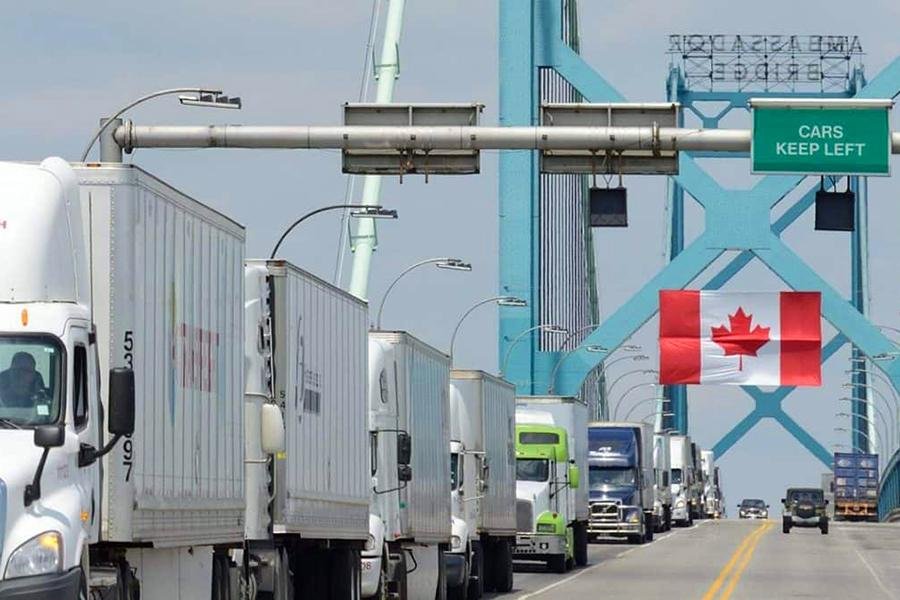
The United States has imposed 50% tariffs on approximately $20 billion worth of Canadian goods, escalating a major trade dispute between the two neighboring countries after last-minute negotiations failed to produce an agreement. The new duties took effect on August 22, 2026, and cover a range of Canadian products, including items such as wooden hockey sticks and other goods listed under the new tariff measures. The affected products represent roughly 5% of Canada’s exports to the United States.
The development marks another significant escalation in U.S.-Canada trade relations and could affect importers, exporters, manufacturers, retailers, supply chains and consumers on both sides of the border. Canada has already announced plans to retaliate, increasing concerns about a broader North American trade war.
Table of Contents
- What Are the New 50% U.S. Tariffs on Canadian Goods?
- Why Did the United States Impose the Tariffs?
- When Did the 50% Canadian Tariffs Take Effect?
- Which Canadian Products Are Affected?
- How Much Trade Is Covered by the New Tariffs?
- Why Did U.S.-Canada Trade Talks Fail?
- Canada’s Response to the New U.S. Tariffs
- How Will the Tariffs Affect U.S. Businesses?
- Could American Consumers Pay Higher Prices?
- Impact on Canadian Businesses and Exporters
- What Do the Tariffs Mean for U.S.-Canada Supply Chains?
- What About the USMCA?
- How Could the Tariffs Affect the U.S. Economy?
- How Could the Tariffs Affect Canada’s Economy?
- What Is Section 338 and Why Is It Important?
- Are All Canadian Goods Subject to a 50% Tariff?
- What Happens Next in the U.S.-Canada Trade Dispute?
- Frequently Asked Questions
- Final Thoughts
- Disclaimer
What Are the New 50% U.S. Tariffs on Canadian Goods?
The new measures are additional import duties of 50% on specific Canadian products entering the United States.
It is important to understand that this does not mean every Canadian product imported into the United States suddenly faces a blanket 50% tariff. The new duties apply to particular products identified under the relevant presidential proclamations and tariff schedules.
The White House has published lists identifying the products covered by the additional duties. One official annex specifies a 50% ad valorem tariff on listed articles, subject to exclusions and other tariff provisions.
An ad valorem tariff is a duty calculated as a percentage of the value of an imported product.
For example, if an imported product subject to a 50% tariff has a customs value of $1,000, a $500 tariff would be calculated on that value, subject to the applicable customs rules and any other duties or exemptions.
Why Did the United States Impose the Tariffs?
The Trump administration has argued that the new tariffs are intended to address what it considers unfair or discriminatory Canadian trade practices.
The White House has specifically cited Canadian policies involving areas such as alcoholic beverages, dairy products and motor vehicles. The administration says some Canadian trade measures disadvantage U.S. commerce.
The new tariffs are therefore part of a wider U.S. trade policy focused on:
- Reciprocal trade
- Market access
- Canadian trade barriers
- U.S. manufacturing
- Domestic industries
- Import competition
- Trade deficits
- Supply-chain security
- Protection of U.S. producers
The tariff dispute is also connected to broader negotiations over the future of North American trade and the U.S.-Mexico-Canada Agreement.
When Did the 50% Canadian Tariffs Take Effect?
The new tariffs took effect on August 22, 2026, after the United States and Canada failed to reach a last-minute trade agreement.
Negotiators had spent days attempting to resolve outstanding issues. Earlier in the week, both sides had indicated that progress was being made, but significant disagreements remained.
The United States had temporarily paused the tariff deadline while negotiations continued. The deadline was ultimately reached without an agreement.
Reuters reported that the new duties cover approximately $20 billion in Canadian goods and represent around 5% of Canada’s exports to the United States.
Which Canadian Products Are Affected?
The affected goods include a range of products specified in the U.S. tariff measures.
Reported examples include:
- Wooden hockey sticks
- Certain alcoholic beverages
- Dairy-related products
- Certain manufactured goods
- Selected consumer products
- Certain automotive-related products
- Other products identified in the official tariff schedules
The exact treatment depends on the Harmonized Tariff Schedule of the United States (HTSUS) classification and the specific presidential proclamation.
The White House’s July tariff measures included separate 50% duties covering different groups of Canadian imports, with products ranging from wine to hockey sticks.
This is why importers should not assume that a product is subject to the new duty simply because it was manufactured in Canada. The exact tariff classification and applicable exemptions matter.
How Much Trade Is Covered by the New Tariffs?
The new 50% duties apply to approximately $20 billion worth of Canadian goods.
While $20 billion is a substantial amount of trade, it represents only about 5% of Canada’s exports to the United States.
That distinction is important.
The new tariffs are significant because they affect particular industries and deepen the trade conflict, but they do not impose a 50% duty on the entire value of U.S.-Canada trade.
The United States and Canada maintain one of the world’s largest bilateral trading relationships, with deeply integrated manufacturing and supply chains.
Why Did U.S.-Canada Trade Talks Fail?
The latest negotiations became increasingly difficult because of disagreements over several major issues.
The two countries had been discussing:
- Tariff reductions
- Steel and aluminum
- Automotive trade
- Dairy market access
- Alcohol distribution
- Softwood lumber
- Rules of origin
- Retaliatory tariffs
- The future of the USMCA
- Canadian trade policies
Earlier reports suggested that the two sides were close to a potential agreement. Reuters reported that negotiations included proposals involving lower tariffs on Canadian-built vehicles and reduced steel and aluminum duties.
However, the negotiations ultimately broke down.
The Canadian government criticized what it described as last-minute U.S. demands, while the United States maintained pressure on Canada to make additional concessions.
The failure of the talks triggered the new tariff measures.
Canada’s Response to the New U.S. Tariffs
Canada has responded by preparing retaliatory tariffs against U.S. products.
Canadian Prime Minister Mark Carney said Canada would respond to the new U.S. duties and suspended further trade negotiations following the breakdown in talks. Reuters reported that Canada plans to impose new tariffs beginning September 8, 2026, alongside support measures for affected Canadian industries.
The Canadian response could affect U.S. exporters in sectors such as:
- Agriculture
- Steel
- Electronics
- Dairy
- Manufacturing
- Consumer goods
- Other industrial products
This creates the possibility of another round of tit-for-tat tariffs, where each country increases duties on products from the other.
How Will the Tariffs Affect U.S. Businesses?
American businesses that import affected Canadian products will be among the first to feel the impact.
A tariff is technically paid to the importing country’s government by the importer. However, the economic burden can be distributed among importers, suppliers, retailers and consumers.
A U.S. company importing a Canadian product subject to a 50% duty may face a significantly higher landed cost.
Businesses then have several options:
- Absorb the additional cost.
- Increase wholesale prices.
- Increase retail prices.
- Negotiate lower prices with Canadian suppliers.
- Find alternative suppliers.
- Move production.
- Redesign their supply chain.
The appropriate response depends on the industry and how easily the company can find alternative sources.
Could American Consumers Pay Higher Prices?
Yes, consumers could face higher prices for some products affected by the tariffs.
However, the size of the increase at the retail level will depend on several factors.
For example, if a product enters the United States with a 50% tariff, the retailer does not necessarily have to increase the final consumer price by exactly 50%.
The retailer might absorb some of the cost, while the importer or manufacturer absorbs another portion.
Alternatively, the entire additional cost—or more—could eventually be passed on to consumers.
Potentially affected categories include certain:
- Food and beverages
- Alcoholic products
- Sporting goods
- Industrial products
- Consumer goods
- Manufactured products
The final impact will depend on supply, competition, margins, exchange rates and whether businesses can find alternative suppliers.
Impact on Canadian Businesses and Exporters
Canadian exporters selling affected products into the U.S. market now face a major competitive disadvantage.
A 50% import tariff can substantially increase the price of a Canadian product compared with a similar product made in the United States or another country without the same tariff.
Canadian businesses could respond by:
- Cutting prices
- Reducing production
- Seeking alternative markets
- Expanding domestic sales
- Moving some production
- Changing suppliers
- Absorbing part of the tariff
- Negotiating with U.S. buyers
Smaller businesses may face particular challenges because they generally have fewer resources to restructure international supply chains.
What Do the Tariffs Mean for U.S.-Canada Supply Chains?
The U.S. and Canada have highly integrated cross-border supply chains.
Manufacturers in both countries frequently depend on components, raw materials and intermediate goods from across the border.
This is particularly important for:
- Automotive manufacturing
- Energy
- Agriculture
- Food processing
- Industrial equipment
- Metals
- Electronics
- Chemicals
- Transportation
A tariff imposed on one component can potentially affect the cost of an entire finished product.
For example, if an American manufacturer imports a Canadian component and then uses it to manufacture a product in the United States, the tariff can increase the company’s production cost.
That makes the issue more complicated than simply taxing finished consumer goods.
What About the USMCA?
The United States-Mexico-Canada Agreement (USMCA) remains a central part of North American trade policy.
USMCA provides preferential trade rules for qualifying products traded among the United States, Canada and Mexico.
However, the latest tariffs demonstrate that not all Canadian products necessarily receive the same treatment under the agreement or other U.S. trade measures.
The current dispute has also raised questions about the future of the North American trade framework.
Reuters reported that broader negotiations involve the future of the USMCA and other trade issues, including automotive rules of origin and market access.
For companies operating across the United States, Canada and Mexico, changes to tariff policy can influence sourcing decisions and long-term investment plans.
How Could the Tariffs Affect the U.S. Economy?
The economic effects are likely to vary across industries.
Possible Benefits
Supporters of tariffs argue that import duties can:
- Protect domestic manufacturers
- Encourage domestic production
- Reduce dependence on foreign suppliers
- Strengthen strategic industries
- Encourage companies to invest in U.S. factories
Possible Costs
Critics and economists have warned that tariffs can also:
- Increase import costs
- Raise prices
- Reduce business investment
- Disrupt supply chains
- Hurt companies that rely on imported inputs
- Trigger retaliation
- Reduce trade volumes
The overall economic impact depends on how long the tariffs remain in place and how businesses and consumers respond.
How Could the Tariffs Affect Canada’s Economy?
Canada is particularly exposed to changes in U.S. trade policy because the United States is its largest trading partner.
Higher U.S. import duties can reduce the competitiveness of Canadian exports.
Potential consequences include:
- Lower export demand
- Reduced factory output
- Business uncertainty
- Job losses in affected industries
- Lower investment
- Pressure on Canadian exporters
- Greater focus on alternative international markets
Reuters reported that the latest U.S. tariffs have already created economic pressure in parts of Canada, including Quebec’s steel industry.
Canada’s government is therefore considering support measures for industries affected by the new duties.
What Is Section 338 and Why Is It Important?
One of the most notable aspects of the new tariffs is the legal authority being used.
The White House has relied on Section 338 of the Tariff Act of 1930 for some of the additional duties.
Section 338 gives the president authority to impose duties in certain circumstances involving discriminatory or unreasonable trade practices affecting U.S. commerce.
The White House’s July proclamations explicitly cited Section 338 as the legal basis for several of the additional Canadian duties.
This is significant because Section 338 is a relatively rarely used provision of U.S. trade law.
The legal foundation of the new tariffs could therefore become an important issue for businesses, trade lawyers and policymakers.
Are All Canadian Goods Subject to a 50% Tariff?
No. The 50% tariff does not automatically apply to every Canadian product entering the United States.
The additional duties apply to products covered by the relevant tariff schedules and presidential proclamations.
Some goods may be subject to different tariff programs, exemptions, exclusions or other trade measures.
For example, the White House has issued separate measures concerning products covered by Section 232 tariffs, including certain steel, aluminum and automotive products.
Therefore, businesses should determine the precise HTSUS classification, country of origin and applicable tariff treatment before calculating the duty owed.
What Happens Next in the U.S.-Canada Trade Dispute?
The immediate future remains uncertain.
Canada has announced retaliatory measures, while the United States has maintained pressure on Canada to change policies that Washington considers discriminatory.
The next phase could involve:
- New retaliatory tariffs
- New trade negotiations
- Legal challenges
- Industry lobbying
- Temporary exemptions
- Additional tariff changes
- Supply-chain adjustments
- New agreements between Washington and Ottawa
The possibility of further negotiations remains important because both countries have strong economic incentives to maintain cross-border trade.
The latest escalation does not necessarily mean the dispute will remain permanently at its current level.
However, the collapse of the latest negotiations shows how quickly tariff policy can change.
Frequently Asked Questions
Why did the U.S. impose 50% tariffs on Canadian goods?
The U.S. imposed the new tariffs to address what the Trump administration describes as unfair or discriminatory Canadian trade practices and barriers affecting U.S. commerce.
When did the new U.S. tariffs on Canadian goods begin?
The new 50% tariffs on the affected Canadian goods took effect on August 22, 2026.
How much Canadian trade is affected?
The new tariffs cover approximately $20 billion worth of Canadian goods, representing roughly 5% of Canada’s exports to the United States.
Does the 50% tariff apply to all Canadian products?
No. The 50% tariff applies to specified products covered by the relevant U.S. tariff measures, not every Canadian import.
What Canadian products are affected?
Affected products include certain goods such as wooden hockey sticks, alcoholic beverages, dairy-related products, manufactured products and other items identified in U.S. tariff schedules.
Will U.S. consumers pay more because of the tariffs?
They could. Businesses importing affected Canadian goods may face higher costs and could pass some or all of those costs to consumers through higher prices.
How is Canada responding?
Canada has announced retaliatory measures against U.S. products and plans to introduce additional sector-specific tariffs beginning September 8, 2026.
Will the tariffs affect American businesses?
Yes. U.S. companies that import affected Canadian products or rely on Canadian components may face higher costs and supply-chain disruption.
What is the USMCA?
The USMCA is the trade agreement connecting the economies of the United States, Mexico and Canada and establishing rules for much of their cross-border trade.
Could the U.S. and Canada reach another trade agreement?
Yes. Further negotiations remain possible, although the latest talks ended without an agreement and Canada has suspended further discussions for now.
The United States’ decision to impose 50% tariffs on approximately $20 billion of Canadian goods represents a significant escalation in the already tense U.S.-Canada trade relationship.
Although the tariffs affect only a portion of Canada’s exports to the United States, their importance goes beyond the value of the products directly covered. The measures could affect cross-border supply chains, import costs, consumer prices, Canadian exporters, American businesses and North American trade policy.
Canada’s planned retaliation adds another layer of uncertainty. If both countries continue increasing tariffs, businesses may need to reconsider sourcing strategies, supplier relationships and investment decisions.
At the same time, the dispute could still lead to renewed negotiations. The United States and Canada remain deeply economically connected, making a stable long-term trade relationship important to businesses and consumers in both countries.
For now, companies involved in U.S.-Canada trade should closely monitor tariff classifications, customs requirements, exemptions, retaliatory measures and future government announcements.
The biggest question is no longer simply whether tariffs will affect bilateral trade—it is how long the new measures will remain in place and whether Washington and Ottawa can reach a broader agreement to stabilize North American commerce.
Sources and References
- The White House — Fact Sheet: President Donald J. Trump Imposes Additional Tariffs on Canada. White House official fact sheet
- Reuters — U.S. hits Canadian goods with 50% tariffs after trade talks fail. Reuters report
- Associated Press — U.S. and Canada fall deeper into a trade war after talks collapse. AP report
- White House — Section 338 tariff proclamation and product annex. Official tariff annex
- U.S. Customs and Border Protection — Trade Remedies. CBP trade remedies information
Disclaimer
This article is provided for general news and informational purposes only. Tariff rates, affected products, exemptions, trade agreements and government policies can change rapidly. Readers and businesses should consult official U.S. Customs and Border Protection, White House, Canadian government and other authoritative sources for the latest requirements.
Vision Daily USA does not provide legal, tax, customs or financial advice. Businesses involved in importing or exporting should consult qualified trade, customs or legal professionals before making decisions based on tariff information.
This article is not affiliated with or endorsed by the U.S. government, Canadian government, or any political organization.