
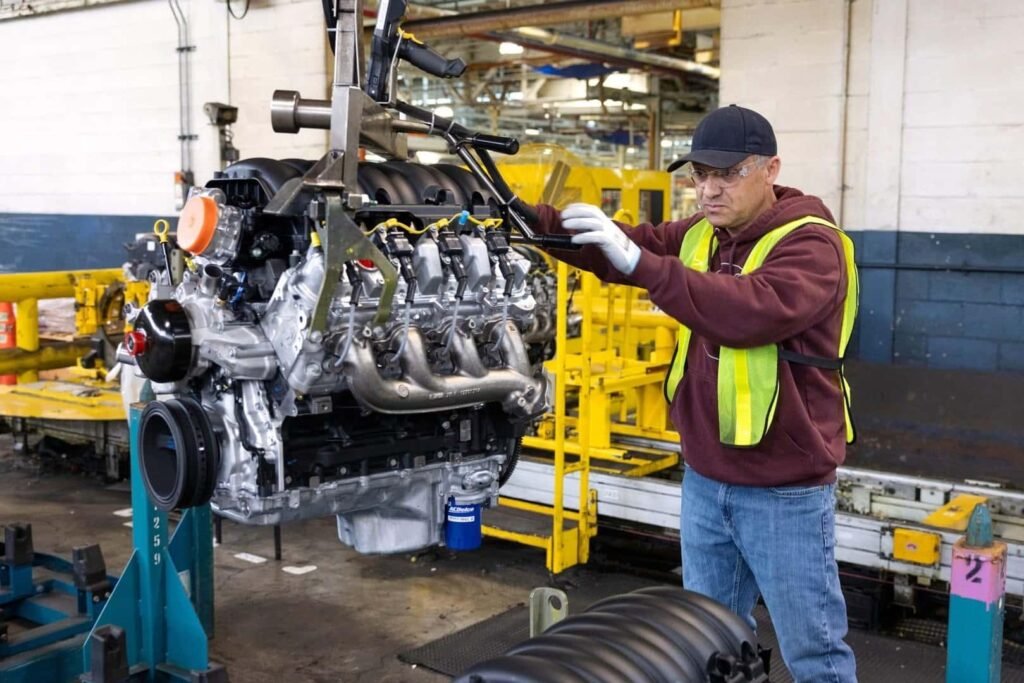
The National Highway Traffic Safety Administration (NHTSA) has expanded its investigation into General Motors’ 6.2-liter L87 V8 engine after receiving hundreds of reports that engines continued to fail even after vehicles received a previous recall remedy.
The federal investigation now covers nearly 1 million GM pickup trucks and SUVs from the 2021–2026 model years. NHTSA’s Office of Defects Investigation is examining whether the previous recall repair was effective and whether the engine problem extends beyond the vehicles originally included in the recall.
The investigation is significant for owners of vehicles such as the Chevrolet Silverado 1500, Chevrolet Tahoe, Chevrolet Suburban, GMC Sierra 1500, GMC Yukon, GMC Yukon XL, Cadillac Escalade, and Cadillac Escalade ESV equipped with the L87 6.2L V8.
Importantly, this investigation is not itself a new recall. It is a regulatory examination that could eventually lead to additional action if NHTSA determines that a safety defect remains unresolved.
Table of Contents
- What Is the NHTSA Investigation Into GM V8 Engines?
- What Is the GM 6.2L L87 V8 Engine?
- Why Is NHTSA Investigating GM Again?
- How Many GM Vehicles Are Involved?
- Which GM Vehicles Use the L87 V8?
- What Caused the GM 6.2L V8 Engine Failures?
- What Happened With the 2025 GM Engine Recall?
- Why Are Engines Still Failing After the Recall?
- What Has NHTSA Found So Far?
- What Does the Investigation Mean for GM Owners?
- Common Symptoms of GM 6.2L V8 Engine Problems
- What Should GM Vehicle Owners Do?
- Is There a New GM V8 Recall?
- Could NHTSA Expand the Recall?
- What Does GM Say About the Investigation?
- Frequently Asked Questions
- Final Thoughts
- Sources and References
- Disclaimer
What Is the NHTSA Investigation Into GM V8 Engines?
The NHTSA investigation is an engineering analysis into continued failures of General Motors’ 6.2-liter L87 V8 gasoline engine.
NHTSA’s Office of Defects Investigation began looking more closely at the effectiveness of GM’s earlier recall remedy after receiving reports of engine failures in vehicles that had already undergone recall-related repairs.
The latest investigation has also expanded beyond the original manufacturing period covered by the 2025 recall. NHTSA is examining L87 engines installed in vehicles built after the original recall production window, following additional reports of engine failures.
This makes the investigation important because regulators are no longer looking only at whether a particular batch of engines had manufacturing defects. They are also examining whether the existing remedy adequately prevents future engine failures.
What Is the GM 6.2L L87 V8 Engine?
The L87 is GM’s 6.2-liter naturally aspirated V8 gasoline engine used in several of the company’s full-size trucks and SUVs.
GM lists the engine at approximately 420 horsepower and 460 lb-ft of torque in its published specifications.
The engine has been offered in popular GM vehicles including:
- Chevrolet Silverado 1500
- Chevrolet Tahoe
- Chevrolet Suburban
- GMC Sierra 1500
- GMC Yukon
- GMC Yukon XL
- Cadillac Escalade
- Cadillac Escalade ESV
The L87 is part of GM’s small-block V8 family and uses technologies designed to balance power, fuel economy and emissions performance.
For truck and SUV buyers, the 6.2L V8 is generally positioned as a higher-performance gasoline engine, offering substantially more power than smaller engine options.
Why Is NHTSA Investigating GM Again?
The latest investigation follows reports that some vehicles experienced engine failures after receiving GM’s recall remedy.
According to Reuters, NHTSA has received 499 complaints involving vehicles that experienced engine failures after the recall remedy, while another 191 reports involve L87 engines that were outside the original recall population.
The agency’s investigation is therefore asking important questions:
- Did the original recall identify all affected engines?
- Is the recall repair preventing future failures?
- Are some repaired engines still at risk?
- Are engines manufactured after the original recall period also experiencing the same problem?
- Does GM need to change the existing remedy?
- Could additional vehicles eventually need to be recalled?
These questions have not yet been fully answered.
How Many GM Vehicles Are Involved?
The expanded NHTSA investigation covers an estimated 997,743 vehicles, or nearly 1 million GM trucks and SUVs equipped with the L87 V8.
That figure is considerably larger than the approximately 600,000 vehicles included in GM’s 2025 recall.
However, it is important to understand the difference between an investigation population and a confirmed recall population.
The fact that nearly 1 million vehicles are being examined does not mean that all of those vehicles have defective engines.
Instead, NHTSA is examining the larger population to determine the scope of the potential defect and whether additional vehicles require action.
Which GM Vehicles Use the L87 V8?
The affected vehicle population includes several high-volume GM truck and SUV models.
Chevrolet Silverado 1500
The Silverado 1500 is one of GM’s most important full-size pickup trucks and is available with the 6.2L V8 in certain configurations.
Chevrolet Tahoe
The Tahoe is a full-size SUV that has been offered with GM’s 6.2L V8.
Chevrolet Suburban
The larger Suburban has also been available with the L87 engine.
GMC Sierra 1500
The GMC Sierra 1500 shares much of its underlying powertrain technology with the Silverado and has offered the 6.2L V8.
GMC Yukon and Yukon XL
These full-size SUVs are also included in the vehicle population being examined.
Cadillac Escalade
The luxury Escalade uses GM’s large-displacement V8 technology and is among the models connected with the L87 investigation.
The exact vehicles covered by a recall or investigation can depend on model year, engine code, production date and VIN, so owners should verify their individual vehicle rather than relying only on the model name.
What Caused the GM 6.2L V8 Engine Failures?
GM previously identified manufacturing and quality problems involving several engine components.
According to reporting on the earlier recall, GM identified issues involving connecting rods, crankshaft oil galleries, crankshaft dimensions and surface finish, as well as potential bearing damage.
These components are critical to the engine’s internal operation.
The crankshaft converts the movement of the pistons and connecting rods into rotational motion that ultimately powers the vehicle.
Connecting rods connect the pistons to the crankshaft.
Engine bearings allow rotating components to move smoothly while maintaining appropriate clearances and lubrication.
If these components are damaged, manufactured outside specifications, or do not receive adequate lubrication, the result can be severe internal engine damage.
Potential outcomes can include:
- Bearing failure
- Connecting-rod damage
- Crankshaft damage
- Loss of engine oil pressure
- Internal engine noise
- Engine seizure
- Sudden loss of power
- Complete engine failure
What Happened With the 2025 GM Engine Recall?
General Motors issued a recall in 2025 involving nearly 600,000 vehicles equipped with the 6.2L L87 V8.
The recall followed a long history of complaints involving engine failures.
According to Reuters, GM had received more than 28,000 complaints relating to the engine before the recall, including reports involving loss of motive power. The earlier investigation identified supplier manufacturing and quality issues as contributing factors.
The recall remedy could involve inspecting the engine and, depending on its condition, repairing or replacing it. Some engines that did not show sufficient wear for replacement received changes involving the oil system and related components.
The purpose of the recall was to reduce the likelihood of catastrophic engine failure.
Why Are Engines Still Failing After the Recall?
This is one of the central questions behind the new NHTSA investigation.
NHTSA has received hundreds of complaints involving engines that reportedly failed after the recall remedy was completed.
According to Reuters, the agency recorded 499 post-remedy complaints, including reports involving vehicles that received repairs or engine replacements.
NHTSA is therefore investigating whether the remedy sufficiently addresses the underlying problem.
There are several possible explanations that regulators may consider, including:
- The original defect may affect a broader engine population.
- Some engines may have damage that was not identified during inspection.
- Replacement or repaired engines may experience related problems.
- Manufacturing problems may extend beyond the original production dates.
- The original repair procedure may not eliminate every failure mechanism.
The investigation is ongoing, so these possibilities should not be treated as final conclusions.
What Has NHTSA Found So Far?
The most important finding so far is that the problem appears to extend beyond the original recall population.
NHTSA has reported:
- 499 complaints involving engines that failed after the recall remedy.
- 191 additional reports involving L87 engines manufactured outside the original recall production period.
- An investigation population of nearly 1 million vehicles.
Reports indicate that the agency’s current engineering analysis is examining both the effectiveness of the remedy and whether engines produced after the original recall period may also be affected.
This does not establish that every vehicle in the investigation population has an engine defect.
What Does the Investigation Mean for GM Owners?
For GM owners, the investigation means that regulators are taking a closer look at continued engine failures.
If your vehicle has an L87 6.2L V8, you should not automatically assume that your engine is defective.
However, owners should take unusual engine symptoms seriously.
Drivers should monitor for signs such as:
- Unusual knocking or tapping sounds
- Low oil pressure warnings
- Engine warning lights
- Excessive engine vibration
- Sudden loss of power
- Abnormal oil consumption
- Metal particles in engine oil
- Difficulty starting
- Engine stalling
- Severe internal engine noise
A serious engine problem can create a safety concern if the vehicle suddenly loses power while traveling.
Common Symptoms of GM 6.2L V8 Engine Problems
Engine failure does not always happen without warning.
Some drivers may notice symptoms before catastrophic damage occurs.
Engine Knocking
A deep knocking sound from the engine can indicate internal mechanical problems.
Oil Pressure Warning
Low oil pressure can be an important warning sign because the engine’s internal components depend on proper lubrication.
Check Engine Light
A check-engine warning does not necessarily mean an engine failure, but it should be diagnosed rather than ignored.
Loss of Power
A sudden reduction in engine power can be particularly concerning in highway traffic.
Engine Vibration
Unusual vibration can indicate problems with combustion or rotating engine components.
Stalling
Engine stalling can become a safety issue if it occurs while driving.
If a driver experiences severe symptoms, the safest approach is to stop operating the vehicle when it is safe to do so and have it inspected by a qualified technician.
What Should GM Vehicle Owners Do?
Owners of potentially affected vehicles should first check their VIN for open recalls.
GM provides an online recall lookup tool where owners can check current recall information for their vehicle.
Owners should also:
- Check their VIN for active recalls.
- Keep maintenance and repair records.
- Follow the manufacturer’s recommended oil specifications.
- Pay attention to engine warning lights and unusual noises.
- Contact a GM dealer if serious symptoms develop.
- Report safety concerns to NHTSA when appropriate.
- Avoid assuming that an older repair automatically means the vehicle is permanently protected.
If your vehicle has already received the recall remedy and subsequently experiences engine failure, retain documentation showing the repair date, mileage, symptoms and repair performed.
That information can be useful when communicating with the dealer or manufacturer.
Is There a New GM V8 Recall?
No new recall covering the entire expanded investigation population has been announced simply because NHTSA expanded its investigation.
The current development is an engineering analysis, not automatically a new recall.
An NHTSA investigation can lead to several possible outcomes.
The agency could:
- Close the investigation.
- Request additional information from GM.
- Require or encourage additional corrective action.
- Determine that the existing remedy is adequate.
- Expand an existing recall.
- Require a new recall if a safety defect is confirmed.
Therefore, owners should distinguish between “NHTSA investigation” and “new safety recall.”
Could NHTSA Expand the Recall?
Yes, it is possible, but no additional recall should be assumed until regulators or GM officially announce one.
The investigation is specifically examining whether the existing remedy is effective and whether the affected vehicle population extends beyond the original recall.
If NHTSA determines that the existing remedy does not adequately address the safety defect, additional corrective action could follow.
That could potentially include:
- Expanded vehicle coverage
- Additional inspections
- Updated repair procedures
- Engine replacements
- Revised components
- Additional recalls
The final outcome will depend on the evidence collected during the engineering analysis.
What Does GM Say About the Investigation?
General Motors has said it is cooperating with NHTSA and remains committed to vehicle safety.
The company previously attributed the original engine issue to supplier manufacturing and quality problems involving internal engine components.
GM also continues to provide recall information and VIN-based recall checking through its official owner resources.
It is important to distinguish statements from the automaker from conclusions reached by federal regulators. The NHTSA investigation is designed to independently examine whether a safety defect and an adequate remedy exist.
Frequently Asked Questions
What is the GM V8 engine under investigation?
NHTSA is investigating GM’s 6.2-liter L87 V8 gasoline engine used in several Chevrolet, GMC and Cadillac trucks and SUVs.
Why is NHTSA investigating GM’s 6.2L V8?
NHTSA is investigating because hundreds of vehicles reportedly experienced engine failures even after receiving the previous recall remedy.
How many GM vehicles are included in the investigation?
The expanded investigation covers an estimated 997,743 GM vehicles from the 2021–2026 model years.
How many complaints has NHTSA received?
NHTSA has received 499 reports involving engine failures after the recall remedy and another 191 reports involving L87 engines outside the original recall population.
Which vehicles use the GM 6.2L L87 V8?
Affected models include the Chevrolet Silverado 1500, Tahoe and Suburban; GMC Sierra 1500, Yukon and Yukon XL; and Cadillac Escalade and Escalade ESV.
Is there a new recall for all GM 6.2L V8 engines?
No. The latest NHTSA action is an expanded engineering investigation, not a new blanket recall for all L87 engines.
What caused the original GM V8 engine failures?
GM previously identified supplier manufacturing and quality issues involving components such as connecting rods, crankshafts and engine bearings.
Can a GM 6.2L V8 fail after receiving the recall repair?
Yes. NHTSA has received reports of engine failures after the recall remedy, which is one reason the agency is examining the effectiveness of the repair.
What should I do if my GM 6.2L V8 makes a knocking noise?
Have the vehicle inspected promptly by a qualified technician, especially if the noise is accompanied by low oil pressure, warning lights, loss of power or other serious symptoms.
How can I check whether my GM vehicle has a recall?
You can check your vehicle’s VIN through GM’s official recall center or NHTSA’s recall database.
Does this investigation mean every L87 engine is defective?
No. The investigation covers a large vehicle population so NHTSA can determine the scope of the potential defect; it does not mean every vehicle has a defective engine.
Could the investigation result in another recall?
Yes. If NHTSA determines that the existing remedy is inadequate or that additional vehicles contain a safety defect, further corrective action or an expanded recall could follow.
The NHTSA investigation into GM’s 6.2L L87 V8 engine is significant because it raises questions about whether the previous recall fully resolved the engine-failure problem.
The federal agency is now examining nearly 1 million GM trucks and SUVs, following hundreds of reports involving engines that reportedly failed after the recall remedy. It is also investigating reports involving L87 engines produced outside the original recall period.
For owners, the most important point is that an investigation is not the same as a new recall. The final outcome has not yet been determined.
Owners of affected Chevrolet, GMC and Cadillac vehicles should check their VINs for recall information, maintain their vehicles according to manufacturer requirements, and take serious engine symptoms seriously.
As NHTSA continues its engineering analysis, the key questions will be whether the original recall remedy is effective, whether the affected production range needs to be expanded, and whether General Motors needs to take additional corrective action.
Sources and References
- Reuters — U.S. highway agency expands probe into GM pickups, SUVs over engine failures. Reuters, August 21, 2026.
- National Highway Traffic Safety Administration — Search Safety Issues. Official NHTSA safety investigation and recall resources.
- General Motors — GM Recall Center. Official VIN-based recall information and owner resources.
- General Motors — 6.2L L87 V8 Engine Specifications. Official GM Powered Solutions information.
- Car and Driver — NHTSA Opens Investigation Into GM V-8s. August 21, 2026.
- Road & Track — NHTSA Opens Query Into Nearly 1 Million GM Vehicles With L87 V8 Engines. August 2026.
Disclaimer
This article is provided for general news and informational purposes only. It does not constitute automotive, legal, financial or safety advice. Vehicle recalls, investigations, repair requirements and safety information can change as NHTSA and General Motors conduct further investigations.
If you own a potentially affected vehicle, check the VIN through official NHTSA or GM resources and contact an authorized dealer or qualified automotive professional regarding specific concerns.
The article does not claim that every GM vehicle equipped with the L87 engine is defective. The NHTSA investigation is ongoing, and its final findings may change the understanding of the issue.