
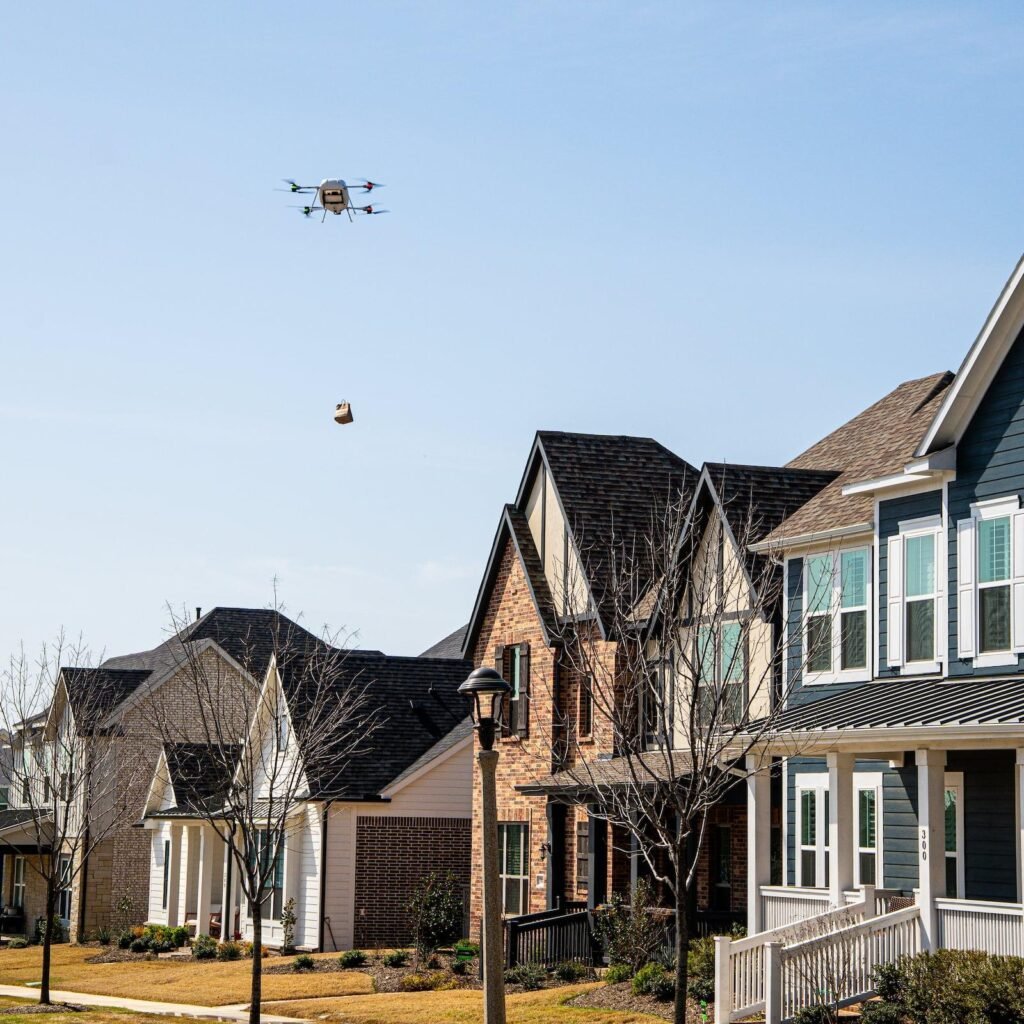
Amazon is taking another major step toward making drone delivery a regular part of online shopping in the United States. The company says its Prime Air drone delivery service will expand to nearly 500 U.S. cities and towns by the end of 2026, a roughly sixfold increase from its current footprint. The expansion is expected to bring faster delivery options to tens of millions of customers.
The move represents a significant development in autonomous delivery, last-mile logistics, e-commerce technology, artificial intelligence, and unmanned aircraft systems. Amazon says eligible products can be delivered by drone in as fast as 30 minutes, potentially changing how consumers receive smaller and time-sensitive orders.
Table of Contents
- What Is Amazon Prime Air?
- Amazon’s Major Drone Delivery Expansion in 2026
- How Many U.S. Cities Will Get Amazon Drone Delivery?
- Where Is Amazon Prime Air Available?
- How Does Amazon Drone Delivery Work?
- What Is the Amazon MK30 Delivery Drone?
- What Products Can Amazon Deliver by Drone?
- How Fast Is Amazon Prime Air?
- How Much Does Amazon Drone Delivery Cost?
- Why Is Amazon Expanding Drone Delivery?
- Benefits of Amazon Drone Delivery
- Challenges Facing Amazon’s Drone Delivery Network
- Drone Safety, FAA Rules, and Regulation
- Privacy, Noise, and Community Concerns
- How Drone Delivery Could Change E-Commerce
- Amazon Prime Air and the Future of Last-Mile Delivery
- Frequently Asked Questions
- Final Thoughts
What Is Amazon Prime Air?
Amazon Prime Air is Amazon’s autonomous drone delivery service designed to transport eligible packages directly from a delivery facility to customers by air.
Instead of sending a traditional delivery van to a customer’s address, an autonomous drone carries a small package from a nearby Prime Air facility and flies to a designated delivery location.
Amazon says Prime Air can deliver millions of eligible items, including groceries, electronics, cosmetics, medications, and household products. The company says eligible orders can arrive in as little as 30 minutes.
The technology is part of Amazon’s broader effort to improve last-mile delivery, which refers to the final stage of moving a package from a local distribution facility to the customer’s home.
Amazon’s Major Drone Delivery Expansion in 2026
Amazon announced in August 2026 that it plans to expand Prime Air to nearly 500 cities and towns across the United States by the end of the year.
This is a substantial increase from the service’s existing footprint. Amazon currently operates Prime Air from 11 locations across 10 U.S. metropolitan areas.
The company says the expansion could bring drone delivery to tens of millions of customers.
Amazon has already completed hundreds of thousands of drone deliveries during 2026, according to the company, and it expects the number of communities served to increase significantly as additional delivery sites become operational.
Why This Expansion Matters
The significance of the announcement goes beyond Amazon.
The expansion could help demonstrate whether commercial drone delivery can operate at a much larger scale in populated U.S. communities.
For years, drone delivery has been discussed as a future technology. Amazon’s latest plan suggests the company wants autonomous aircraft to become a more practical component of its existing logistics network.
How Many U.S. Cities Will Get Amazon Drone Delivery?
Amazon plans to reach nearly 500 U.S. cities and towns by the end of 2026.
The company describes this as approximately a sixfold expansion of its current footprint.
However, reaching 500 communities does not mean every household within those communities will automatically receive drone delivery.
Availability depends on factors such as:
- ZIP code
- Distance from the drone delivery facility
- Eligible delivery address
- Package weight and size
- Product eligibility
- Local approvals
- Operational conditions
- Weather and safety requirements
Amazon says customers in eligible areas will see the drone delivery option while shopping or during checkout.
Where Is Amazon Prime Air Available?
Amazon currently operates Prime Air from locations serving metro areas in several U.S. states, including:
- Arizona
- Florida
- Kansas
- Louisiana
- Michigan
- Nebraska
- Texas
Current service locations include the Phoenix, Tampa, Kansas City, Baton Rouge, Detroit, Omaha, Houston, Dallas, San Antonio, and Waco areas.
Amazon has also announced upcoming launches around:
- Chicago, Illinois
- Syracuse, New York
- Cleveland, Ohio
- Atlanta, Georgia
- Boise, Idaho
These locations are part of the company’s wider plan to expand its drone delivery network during 2026.
How Does Amazon Drone Delivery Work?
Amazon’s drone delivery process combines autonomous flight technology, computer vision, sensors, artificial intelligence, navigation systems, and automated package handling.
The basic process works like this:
1. Customer Places an Order
A customer purchases an eligible item through Amazon.
If the delivery address is within a Prime Air service area and the product meets the requirements, a drone delivery option may appear.
2. Package Is Prepared
The eligible item is packed for drone transportation.
The package needs to meet Amazon’s weight and size requirements.
3. Drone Takes Off
The delivery drone launches from a nearby Prime Air facility.
4. Autonomous Flight
The aircraft navigates toward the customer’s location using onboard sensors and navigation technology.
Amazon says its drones use a Detect-and-Avoid system that allows the aircraft to monitor surrounding airspace and make real-time safety decisions.
5. Drone Identifies the Delivery Area
The drone uses its onboard technology to determine a suitable delivery location.
6. Package Is Released
The drone hovers above the delivery area and lowers or releases the package.
7. Drone Returns
After completing the delivery, the aircraft returns to the delivery facility or continues its assigned operation.
This level of automation is one of the reasons Amazon describes Prime Air as a major part of its future delivery strategy.
What Is the Amazon MK30 Delivery Drone?
Amazon’s current Prime Air system uses its MK30 delivery drone, a newer generation aircraft designed specifically for package delivery.
The MK30 is smaller and lighter than previous Amazon delivery drone designs and was developed to improve flight performance, efficiency, and operational capabilities.
Amazon has said the MK30 can operate with advanced sensing and navigation systems designed to help the aircraft identify and avoid obstacles.
The drone is designed for small-package delivery, rather than transporting large boxes or heavy shipments.
What Products Can Amazon Deliver by Drone?
Drone delivery is primarily designed for small, lightweight products.
Amazon says Prime Air can deliver millions of eligible products, including:
- Groceries
- Electronics
- Household supplies
- Beauty products
- Cosmetics
- Over-the-counter medications
- Everyday essentials
- Small consumer goods
Amazon says the service is designed around packages weighing 5 pounds or less and items that can fit within the drone’s delivery specifications.
This means customers should not expect drones to replace conventional delivery trucks for large packages, furniture, appliances, or heavy shipments.
Instead, drone delivery is aimed at small and urgent purchases where speed provides the greatest benefit.
How Fast Is Amazon Prime Air?
One of the biggest selling points of Prime Air is speed.
Amazon says eligible packages can be delivered in as little as 30 minutes.
That could be particularly useful when customers need everyday products quickly.
For example, a customer might order:
- A household item they suddenly need
- A small electronic accessory
- Certain groceries
- A personal-care product
- An eligible medication
- Other lightweight essentials
Instead of waiting for a conventional delivery vehicle, the order could travel directly from a nearby facility by air.
However, 30 minutes should be viewed as an advertised delivery capability rather than a guarantee for every order. Actual delivery times can depend on availability, weather, distance, package eligibility, and operational conditions.
How Much Does Amazon Drone Delivery Cost?
Drone delivery pricing can depend on the order and Prime membership status.
Reuters reported that Amazon’s drone delivery service can cost $4.99 for eligible orders, while Prime members may receive a lower price, and qualifying orders over $50 can receive free drone delivery.
Pricing and eligibility can change, so customers should check the final delivery options and price displayed during Amazon checkout.
Why Is Amazon Expanding Drone Delivery?
Amazon’s expansion is driven by several strategic goals.
Faster Customer Delivery
The most obvious advantage is speed.
Drone delivery could allow Amazon to deliver certain products considerably faster than conventional ground transportation.
Improving Last-Mile Logistics
The final stage of delivery is one of the most challenging and expensive parts of e-commerce logistics.
Delivery vans must navigate roads, traffic, parking restrictions, and multiple addresses.
A drone can travel directly through the air, potentially reducing some of these constraints.
Reducing Delivery Pressure
Amazon handles an enormous number of packages.
Using multiple delivery methods—including vans, aircraft, fulfillment centers, robots, and drones—could give the company greater flexibility.
Expanding Same-Day and Ultra-Fast Delivery
Prime Air fits into Amazon’s larger strategy of providing same-day delivery, fast shipping, and on-demand commerce.
Building Autonomous Logistics
Amazon is investing heavily in automation.
Drone delivery represents another step toward a logistics system where machines perform more of the physical work involved in moving products.
Benefits of Amazon Drone Delivery
The expansion of Prime Air could offer several advantages for consumers and businesses.
1. Extremely Fast Delivery
The ability to receive an eligible package in around 30 minutes could be useful for urgent purchases.
2. Less Road Travel for Some Deliveries
A drone does not need to use roads for the actual delivery flight.
3. Potentially More Efficient Last-Mile Logistics
For small packages going to nearby customers, direct aerial transportation could become an efficient alternative to traditional delivery vehicles.
4. Convenience
Customers can potentially order small products and receive them shortly afterward without visiting a physical store.
5. New Logistics Technology
Amazon’s investment could accelerate development in autonomous vehicles, artificial intelligence, robotics, aerial navigation, and smart logistics.
Challenges Facing Amazon’s Drone Delivery Network
Despite the potential benefits, expanding drone delivery to hundreds of communities will not be simple.
Weather
Strong winds, heavy rain, storms, and other weather conditions can affect drone operations.
Airspace Management
Commercial drones need to operate safely around other aircraft and infrastructure.
Noise
Some communities have raised concerns about the sound produced by delivery drones.
Privacy
Residents may have concerns about cameras and sensors used by autonomous aircraft.
Package Accuracy
A drone must identify a safe and appropriate delivery location before releasing a package.
Local Regulations
Each community can have different zoning, permitting, and regulatory requirements.
Public Acceptance
Even if the technology is technically capable of operating safely, widespread adoption depends partly on whether residents are comfortable with drones flying over their neighborhoods.
Drone Safety, FAA Rules, and Regulation
Drone delivery in the United States operates within a regulatory framework overseen by the Federal Aviation Administration (FAA).
The FAA states that Amazon Prime Air was the first company to operate a drone larger than 55 pounds under an air carrier certificate as a standard Part 135 operator. Amazon began commercial operations in Oregon in 2020.
The FAA has also been involved in environmental reviews and approvals associated with Amazon’s expansion into additional locations.
Amazon’s ability to operate beyond the direct visual range of the operator has been an important development for scaling commercial drone delivery.
This type of operation is commonly known as BVLOS, or Beyond Visual Line of Sight.
BVLOS capability is particularly important because a large commercial drone network would be difficult to operate if every aircraft had to remain within the operator’s direct visual range.
Privacy, Noise, and Community Concerns
Technology alone will not determine whether Amazon’s drone delivery expansion succeeds.
Community acceptance will also be important.
Some residents have expressed concerns about:
- Drone noise
- Aircraft flying over homes
- Cameras and privacy
- Package security
- Safety near people and property
- Possible accidents
- Wildlife interactions
- Neighborhood disruption
Reuters reported that community concerns have included noise and privacy, while local regulatory bodies have reviewed Amazon’s proposed operations.
Amazon says its drone technology includes systems designed to identify obstacles and make safety decisions during flight.
As the network expands, Amazon will need to demonstrate that drone delivery can be both efficient and socially acceptable.
How Drone Delivery Could Change E-Commerce
The expansion of Prime Air could influence the wider e-commerce industry.
Traditional delivery has historically relied heavily on trucks, vans, warehouses, and human drivers.
Drone delivery introduces another layer of logistics.
Imagine an e-commerce network where:
- Large orders travel by trucks.
- Small urgent orders travel by drone.
- Robots move packages inside warehouses.
- AI predicts customer demand.
- Automated systems select the fastest delivery method.
- Fulfillment centers are positioned closer to customers.
This could create a more flexible multi-modal delivery network.
Amazon is not the only company exploring this technology. Other companies, including Wing and Zipline, are also developing commercial drone delivery systems.
Competition could encourage improvements in drone design, delivery speed, safety, cost, and customer experience.
Amazon Prime Air and the Future of Last-Mile Delivery
Amazon’s latest expansion suggests that drone delivery is moving beyond a small experimental program toward a larger commercial logistics network.
Reaching nearly 500 U.S. cities and towns would represent a major change from the limited service footprint Amazon has today.
The company still faces challenges involving regulation, infrastructure, weather, community acceptance, operational reliability, and economics.
But if Amazon can successfully scale Prime Air, drone delivery could become an increasingly normal part of the U.S. shopping experience.
Instead of asking whether drones will deliver packages in the future, consumers may increasingly ask which products qualify for drone delivery and whether their ZIP code is covered.
Frequently Asked Questions
What is Amazon Prime Air?
Amazon Prime Air is Amazon’s autonomous drone delivery service that uses delivery drones to transport eligible packages directly to customers.
How many U.S. cities will Amazon drone delivery reach?
Amazon plans to expand Prime Air to nearly 500 U.S. cities and towns by the end of 2026.
How fast can Amazon drone delivery be?
Amazon says eligible orders can be delivered in as fast as 30 minutes.
What products can Amazon deliver by drone?
Amazon says Prime Air can deliver millions of eligible lightweight products, including groceries, electronics, cosmetics, medications, and household items.
How heavy can an Amazon drone delivery package be?
Prime Air is designed for packages weighing about 5 pounds or less, subject to the specific product and delivery requirements.
Where is Amazon drone delivery currently available?
Prime Air currently operates from 11 locations serving 10 U.S. metro areas across states including Arizona, Florida, Kansas, Louisiana, Michigan, Nebraska, and Texas.
Will every Amazon customer get drone delivery?
No. Drone delivery is only available to eligible customers, products, and addresses within Prime Air service areas.
Does Amazon drone delivery cost extra?
It can. Reuters reported a $4.99 standard delivery charge, with lower pricing for Prime members and free delivery for qualifying orders over $50; customers should check the current price at checkout.
Are Amazon delivery drones autonomous?
Yes. Prime Air drones are designed to operate autonomously using onboard sensors, cameras, navigation technology, and Amazon’s Detect-and-Avoid system.
Is Amazon drone delivery safe?
Amazon designs Prime Air around autonomous navigation and obstacle-avoidance technology, while its commercial operations are subject to FAA requirements and approvals.
Does Amazon need FAA approval for drone delivery?
Yes. Commercial drone delivery in the United States operates under FAA regulations and authorizations. Amazon operates Prime Air under an FAA Part 135 framework.
Will drones replace Amazon delivery drivers?
No. Drone delivery is expected to complement Amazon’s existing delivery network rather than replace conventional delivery vehicles for all packages.
Why is Amazon expanding drone delivery?
Amazon is expanding Prime Air to provide faster delivery, improve last-mile logistics, increase delivery flexibility, and develop autonomous transportation technology.
Amazon’s plan to expand Prime Air drone delivery to nearly 500 U.S. cities and towns by the end of 2026 marks one of the company’s most ambitious steps toward mainstream autonomous delivery.
The technology could make 30-minute delivery of small, eligible products a more common option for millions of American consumers.
However, the success of Amazon’s drone delivery expansion will depend on more than technological innovation. FAA regulations, local approvals, weather, safety, noise, privacy, package reliability, and public acceptance will all influence how quickly the service can grow.
For consumers, the biggest change could be simple: the delivery vehicle may no longer always be a van. For certain lightweight orders, the package could arrive from the sky.
Amazon’s expansion therefore represents more than another faster-shipping option. It is a major experiment in the future of autonomous delivery, e-commerce logistics, artificial intelligence, robotics, and last-mile transportation.
The information provided in this article is for general informational and news purposes only. Details about Amazon Prime Air, drone delivery locations, pricing, delivery times, regulations, and expansion plans are based on publicly available information and may change as Amazon, the Federal Aviation Administration (FAA), or other authorities update their policies and operations.
Sources: Information in this article is based on publicly available sources, including Amazon, the FAA, and reputable news organizations.