
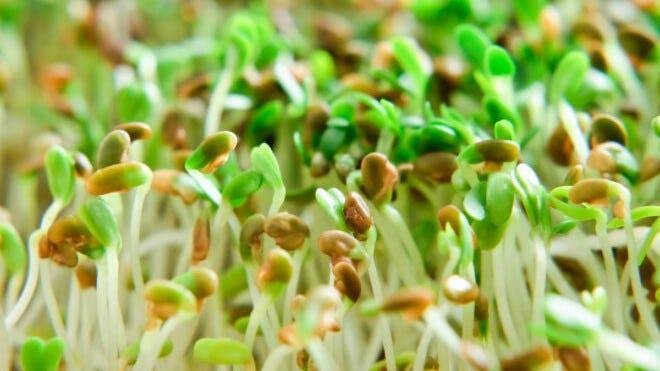
U.S. health officials are investigating a multistate outbreak of Shiga toxin-producing E. coli (STEC) and Salmonella infections linked to alfalfa sprouts. According to the latest update from the U.S. Food and Drug Administration (FDA), 55 people in 15 states have been identified with infections associated with multiple strains of E. coli and one strain of Salmonella.
The investigation involves alfalfa sprouts distributed by Everything Sprouts, LLC, a Minneapolis-based producer. The affected sprouts have been sold under the Calco and Everything Sprouts brands at retailers, grocery stores, restaurants and foodservice locations.
The FDA says consumers should not eat, sell or serve Calco or Everything Sprouts-brand alfalfa sprouts while the investigation continues. Four people have been hospitalized, although no deaths have been reported so far.
The situation is still developing, and federal, state and local health authorities are working to determine how the contamination occurred and whether additional products or companies could be involved.
Table of Contents
- What Happened in the Alfalfa Sprout Outbreak?
- How Many People Are Sick?
- Which States Are Affected?
- What Products Are Linked to the Outbreak?
- Why Are Alfalfa Sprouts a Food Safety Concern?
- E. coli and Salmonella: What’s the Difference?
- Symptoms of E. coli Infection
- Symptoms of Salmonella Infection
- Who Is Most at Risk?
- How Investigators Traced the Outbreak
- What Consumers Should Do
- How to Prevent Foodborne Illness From Sprouts
- History of Sprout-Related Foodborne Outbreaks
- What Happens Next?
- Frequently Asked Questions
- Conclusion
- Sources and References
1. What Happened in the Alfalfa Sprout Outbreak?
The FDA and the Centers for Disease Control and Prevention (CDC), working with state and local public health agencies, are investigating illnesses caused by Shiga toxin-producing E. coli and Salmonella Agona.
Investigators identified epidemiological and traceback evidence connecting illnesses to alfalfa sprouts distributed by Everything Sprouts, LLC.
The FDA reported on August 21, 2026, that 55 people had been infected across 15 states. Laboratory testing identified several E. coli serotypes, including E. coli O26, O103 and O168, along with Salmonella Agona. Some patients were infected with more than one outbreak strain.
The investigation remains ongoing.
Current outbreak figures
| Category | Current information |
|---|---|
| Total illnesses | 55 |
| E. coli infections | 46 |
| Salmonella infections | 7 |
| Both E. coli and Salmonella | 2 |
| Hospitalizations | 4 |
| Deaths | 0 |
| States affected | 15 |
| Illness onset period | May 31–August 8, 2026 |
| Investigation status | Ongoing |
These figures are based on the FDA’s August 21, 2026 update and may change as health departments identify and confirm additional cases.
2. How Many People Are Sick?
As of the latest FDA update, 55 people have been reported sick in connection with the outbreak.
Of these:
- 46 people were infected with E. coli.
- 7 people were infected with Salmonella.
- 2 people were infected with both E. coli and Salmonella.
- 4 people have been hospitalized.
- No deaths have been reported.
Illnesses began between May 31, 2026, and August 8, 2026.
Importantly, these numbers are not necessarily the final totals. Foodborne outbreak investigations can take time because people may not seek medical attention, diagnostic testing may not always occur, and health departments need laboratory and epidemiological information to determine whether individual illnesses belong to an outbreak.
The FDA reported that 34 people had been interviewed, and 26 of those people—76%—reported eating alfalfa sprouts before becoming sick.
3. Which States Are Affected?
The current outbreak involves cases in 15 states:
- Florida
- Indiana
- Iowa
- Kansas
- Michigan
- Minnesota
- New Hampshire
- New York
- North Carolina
- North Dakota
- Pennsylvania
- South Carolina
- South Dakota
- Washington
- Wisconsin
The geographic distribution across multiple states is one reason federal health authorities are treating the situation as a multistate foodborne illness outbreak.
Because alfalfa sprouts can be distributed through grocery stores, restaurants and foodservice businesses, contaminated products can potentially reach consumers in several states before investigators identify the common source.
4. What Products Are Linked to the Outbreak?
The FDA has identified alfalfa sprouts grown by Everything Sprouts, LLC as a source associated with the illnesses.
The products were sold under the:
- Calco brand
- Everything Sprouts brand
The FDA currently advises consumers, retailers and restaurants not to eat, sell or serve these alfalfa sprouts. The agency is working with the company and has recommended that the products be recalled.
The FDA is also continuing to investigate distribution information to determine whether additional products or companies could be involved.
What if you have the sprouts at home?
Consumers should check refrigerators and freezers for the affected products.
If you have Calco or Everything Sprouts-brand alfalfa sprouts, the FDA recommends:
- Do not eat them.
- Do not serve them.
- Do not sell them.
- Throw them away or return them to the place of purchase.
- Clean and sanitize surfaces or containers that came into contact with the sprouts.
If sprouts were frozen without their original packaging and you cannot determine whether they are part of the affected products, the FDA advises throwing them away.
5. Why Are Alfalfa Sprouts a Food Safety Concern?
Alfalfa sprouts are produced under warm and humid conditions that encourage seeds to germinate and grow.
Unfortunately, those same conditions can also allow certain bacteria to multiply rapidly if pathogens are present.
Potential contamination can occur before or during sprout production. Historically, investigations into sprout-associated outbreaks have examined issues involving contaminated seeds, water, agricultural environments, handling, equipment and sanitation.
The CDC notes that raw or undercooked sprouts can cause food poisoning because the conditions necessary for sprout growth are also favorable for bacterial growth.
This makes sprouts different from many other fresh produce items. Washing may not eliminate bacteria that have become established during the sprouting process.
Why contamination can become a serious problem
A single contaminated seed can potentially lead to bacterial multiplication during sprouting. If contaminated sprouts are then distributed to restaurants or grocery stores, multiple consumers can become exposed.
That is why food safety controls, seed sanitation, environmental monitoring, sanitation procedures and testing are important parts of commercial sprout production.
6. E. coli and Salmonella: What’s the Difference?
Although E. coli and Salmonella are both bacteria that can cause foodborne illness, they are different organisms and can produce different symptoms and complications.
E. coli
The outbreak involves Shiga toxin-producing E. coli (STEC).
Some STEC infections can cause:
- Severe stomach cramps
- Diarrhea
- Bloody diarrhea
- Nausea
- Vomiting
- Fever
In serious cases, STEC infection can lead to hemolytic uremic syndrome (HUS), a potentially life-threatening complication that can damage the kidneys.
Salmonella
Salmonella infection, commonly called salmonellosis, can cause:
- Diarrhea
- Fever
- Abdominal cramps
- Nausea
- Vomiting
The FDA states that Salmonella illness generally begins 12 to 72 hours after consuming contaminated food, and symptoms typically last four to seven days.
7. Symptoms of E. coli Infection
Symptoms of Shiga toxin-producing E. coli infection can begin several days after exposure.
According to the FDA, symptoms can occur a few days after consuming contaminated food or as long as nine days later. Common symptoms include:
- Severe abdominal or stomach cramps
- Diarrhea
- Fever
- Nausea
- Vomiting
Some people develop bloody diarrhea, which can be a sign of a more serious E. coli infection.
One of the major concerns with STEC is HUS. This complication can cause kidney failure and may also result in other serious health problems.
Anyone who develops concerning symptoms after eating potentially contaminated sprouts should contact a healthcare professional.
8. Symptoms of Salmonella Infection
Salmonella food poisoning can cause gastrointestinal symptoms that may include:
- Diarrhea
- Fever
- Abdominal pain or cramps
- Nausea
- Vomiting
The FDA says Salmonella illness usually begins within 12 to 72 hours after exposure and symptoms commonly last four to seven days.
Most people recover without specific treatment, but some infections can become severe and require medical attention.
9. Who Is Most at Risk?
Foodborne illness can affect anyone, but some groups have a higher risk of developing severe complications.
These include:
- Children younger than five
- Adults aged 65 and older
- People with weakened immune systems
- Pregnant people
- People with certain underlying health conditions
The FDA specifically notes that young children, older adults and people with weakened immune systems are more likely to develop severe Salmonella infections.
For vulnerable individuals, avoiding raw sprouts is particularly important.
10. How Investigators Traced the Outbreak
Foodborne outbreak investigations typically combine several types of evidence rather than relying on a single clue.
Epidemiological evidence
Health officials interview people who became sick to identify foods, restaurants, grocery stores and other exposures they may have shared.
In the current outbreak, 26 of 34 interviewed people reported eating alfalfa sprouts before becoming ill.
Laboratory evidence
Public health laboratories test clinical specimens from sick people to identify pathogens.
In this investigation, officials identified multiple STEC strains and Salmonella Agona.
Traceback investigation
Investigators then work backward through the food supply chain.
They examine where patients purchased or consumed the food, which restaurants or retailers received it, and which supplier distributed it.
In this case, traceback evidence from restaurants and grocery stores identified Everything Sprouts, LLC as a source of the implicated alfalfa sprouts.
FDA inspection
The FDA began an inspection and sample collection at Everything Sprouts on August 19, 2026.
The purpose is to determine the source of contamination and whether additional products or firms may be connected to the outbreak.
11. What Consumers Should Do
The most important current recommendation is straightforward:
Do not eat, sell or serve Calco or Everything Sprouts-brand alfalfa sprouts.
If you have the affected sprouts:
- Dispose of them or return them to the retailer.
- Wash your hands after handling them.
- Clean refrigerators or storage areas where they were kept.
- Clean and sanitize countertops and other food-contact surfaces.
- Wash containers that touched the sprouts.
- Avoid serving potentially contaminated sprouts to other people.
Consumers who ate the affected sprouts and develop symptoms consistent with E. coli or Salmonella infection should contact a healthcare provider.
12. How to Prevent Foodborne Illness From Sprouts
The current outbreak highlights the importance of safe food handling.
Avoid raw sprouts when possible
Cooking sprouts thoroughly can reduce the risk of foodborne illness.
The CDC advises that eating raw or undercooked sprouts may cause food poisoning and recommends cooking sprouts thoroughly to reduce the risk.
Prevent cross-contamination
Keep raw sprouts away from foods that are ready to eat.
Use clean:
- Cutting boards
- Plates
- Knives
- Utensils
- Food-storage containers
Wash your hands before and after handling potentially contaminated foods.
Follow food recall announcements
During a foodborne illness outbreak, products can be removed from stores quickly. Consumers should monitor official FDA and CDC announcements for updated product information.
13. History of Sprout-Related Foodborne Outbreaks
The current investigation is not the first time sprouts have been associated with foodborne illness outbreaks in the United States.
For example, a 2022 Salmonella Typhimurium outbreak was linked to SunSprout Enterprises’ raw alfalfa sprouts. CDC ultimately reported 63 illnesses in eight states, and the outbreak was declared over in February 2023.
Earlier outbreaks have also demonstrated the risks associated with raw sprouts.
A 2001 CDC report described a multistate E. coli O157 outbreak associated with alfalfa sprouts grown from contaminated seeds. Investigators identified 85 illnesses and traced the seeds used for sprouting to a common lot.
There have also been Salmonella outbreaks associated with alfalfa sprouts in 2010, 2011 and 2016.
This history demonstrates why food safety authorities pay particular attention to raw sprouts during foodborne illness investigations.
14. What Happens Next?
The investigation is still active.
The FDA and CDC are expected to continue working with state and local health departments to:
- Identify additional illnesses.
- Determine the full distribution of implicated sprouts.
- Test environmental and product samples.
- Investigate the production facility.
- Determine how contamination occurred.
- Identify whether additional products are affected.
- Coordinate any necessary recalls or market withdrawals.
- Provide updated consumer safety recommendations.
The FDA has emphasized that the investigation is ongoing and that additional information may be added to its outbreak advisory.
Consumers should therefore avoid relying on outdated information and should check official FDA and CDC updates for the latest status.
15. Frequently Asked Questions
Are alfalfa sprouts linked to an E. coli and Salmonella outbreak?
Yes. U.S. health authorities are investigating a multistate outbreak involving Shiga toxin-producing E. coli and Salmonella infections linked to alfalfa sprouts distributed by Everything Sprouts, LLC.
How many people are sick?
As of the FDA’s August 21, 2026 update, 55 people in 15 states have been reported sick. Four people have been hospitalized and no deaths have been reported.
Which alfalfa sprouts should consumers avoid?
The FDA advises consumers not to eat, sell or serve Calco and Everything Sprouts-brand alfalfa sprouts.
What are the symptoms of E. coli?
Symptoms can include severe stomach cramps, diarrhea, fever, nausea and vomiting. Some STEC infections can cause bloody diarrhea and serious complications such as HUS.
What are the symptoms of Salmonella?
Typical symptoms include diarrhea, fever and abdominal cramps. Nausea and vomiting can also occur.
Can cooking sprouts reduce the risk?
Yes. The CDC recommends cooking sprouts thoroughly because raw or undercooked sprouts can carry harmful bacteria.
Should I eat sprouts during the current outbreak?
Consumers should follow the FDA’s current advisory and not eat Calco or Everything Sprouts-brand alfalfa sprouts. More generally, people at higher risk of severe foodborne illness should be especially cautious with raw sprouts.
What should I do if I ate the affected sprouts?
If you develop symptoms consistent with E. coli or Salmonella infection after eating the affected sprouts, contact a healthcare professional. Seek prompt medical advice for severe or worsening symptoms.
The 2026 multistate E. coli and Salmonella outbreak linked to alfalfa sprouts is an important reminder that raw sprouts can carry foodborne pathogens.
As of August 21, federal health officials had identified 55 illnesses across 15 states, four hospitalizations and no deaths. Investigators have linked the illnesses through epidemiological and traceback evidence to alfalfa sprouts distributed by Everything Sprouts, LLC, sold under the Calco and Everything Sprouts brands.
The FDA’s investigation remains ongoing, and the agency has recommended that the affected company conduct a recall.
For consumers, the most important step is to follow official food-safety guidance: do not eat, sell or serve the implicated alfalfa sprouts, dispose of or return affected products, and thoroughly clean surfaces that came into contact with them.
Because outbreak investigations can evolve as laboratory results and traceback information become available, consumers should continue checking official FDA and CDC announcements for updates.
17. Sources and References
- U.S. Food and Drug Administration — Outbreak Investigation of Shiga Toxin-Producing E. coli & Salmonella: Sprouts (August 2026)
- CDC — Salmonella Outbreak Linked to Alfalfa Sprouts
- CDC — Investigation Update: Salmonella Outbreak, Alfalfa Sprouts
- CDC — Multistate E. coli O157 Outbreak Linked to Alfalfa Sprouts
- Reuters — U.S. Health Agencies Report 55 Cases of E. coli and Salmonella Infections Tied to Alfalfa Sprouts
Editorial note: Case counts and product guidance can change as the investigation develops. The figures in this article reflect the FDA’s August 21, 2026 update available at the time of writing.