
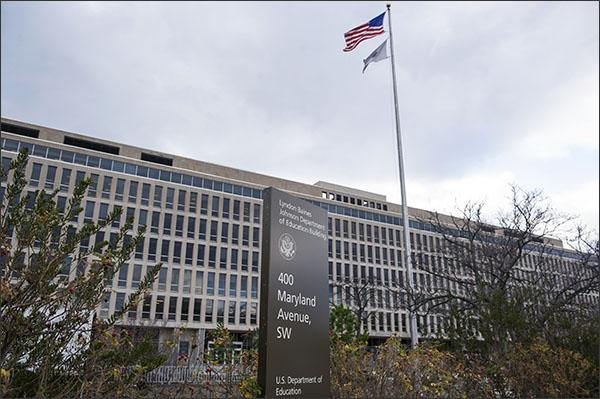
The U.S. Department of Education has opened federal civil rights investigations into San Jose State University (SJSU) and San Francisco State University (SFSU) following allegations that Jewish students experienced antisemitic harassment and hostile campus environments.
The investigations were opened on August 6, 2026, by the Department of Education’s Office for Civil Rights (OCR). Federal officials are examining whether the two California universities violated Title VI of the Civil Rights Act of 1964, which prohibits discrimination based on race, color, or national origin in education programs receiving federal financial assistance.
The federal probes have attracted national attention because they come amid broader scrutiny of American universities over campus antisemitism, discrimination, free speech, student safety, academic freedom and institutional responses to political demonstrations.
It is important to emphasize that opening a federal investigation is not the same as finding a university responsible for violating federal law. San Jose State has explicitly stated that the opening of the investigation is not a finding of wrongdoing and said it intends to cooperate with the OCR process.
This article explains what is known about the investigations, what federal officials are examining, how the universities have responded, what Title VI means, and what could happen next.
Table of Contents
- What Happened at the Two California Universities?
- Which Universities Are Under Investigation?
- Why Did the Department of Education Open the Investigations?
- What Is Title VI of the Civil Rights Act?
- Allegations Involving San Jose State University
- Allegations Involving San Francisco State University
- What Does the Federal Investigation Examine?
- How Have the Universities Responded?
- Does an Investigation Mean the Universities Violated Federal Law?
- Could Federal Funding Be Affected?
- The Broader Federal Scrutiny of Universities
- Antisemitism, Free Speech and Campus Protests
- Academic Freedom and Student Rights
- What Happens During an OCR Investigation?
- What Could Happen After the Investigation?
- Why the Investigations Matter
- Frequently Asked Questions
- Conclusion
- Sources and References
1. What Happened at the Two California Universities?
On August 6, 2026, the U.S. Department of Education announced that its Office for Civil Rights had opened investigations into San Jose State University and San Francisco State University.
The federal agency said the investigations followed complaints alleging that the universities permitted and perpetuated antisemitic harassment against students.
According to the Education Department, the complaints raised concerns about whether Jewish students experienced hostile educational environments because of their Jewish ancestry.
The department said its investigators would determine whether the universities violated Title VI of the Civil Rights Act of 1964.
The announcement places the two California State University campuses under formal federal civil rights scrutiny.
However, the investigation itself does not establish that the allegations are true. The purpose of an OCR investigation is to gather evidence and determine whether a recipient of federal financial assistance complied with applicable civil rights requirements.
San Jose State made this distinction clear in its response, stating that an investigation is not a finding that the university violated federal law.
2. Which Universities Are Under Investigation?
The two institutions are:
San Jose State University
San Jose State University is located in downtown San Jose and is part of the California State University (CSU) system.
The federal investigation concerns allegations of antisemitic harassment and whether the university adequately protected Jewish students from a hostile educational environment.
San Francisco State University
San Francisco State University is also part of the California State University system.
The Department of Education opened a separate OCR investigation into SFSU based on allegations involving antisemitic harassment and the treatment of Jewish students on campus.
Both universities are public institutions and receive federal financial assistance, making them subject to applicable federal civil rights requirements.
3. Why Did the Department of Education Open the Investigations?
The Education Department says complaints raised concerns about antisemitic harassment and hostile environments affecting Jewish students.
The federal announcement specifically cited allegations involving threats, social exclusion, classroom hostility and disruptions connected to campus protests.
At San Jose State, the department said complaints alleged that Jewish students were threatened, shunned or made to feel unwelcome in classrooms because of their Jewish ancestry.
The federal agency also referenced allegations involving anti-Israel protests that disrupted classes and displaced students and staff, as well as reports of physical attacks against Jewish students.
These allegations are being investigated rather than treated as established facts.
The central federal question is whether the universities knew or should have known about discriminatory conduct and failed to respond appropriately under federal civil rights law.
4. What Is Title VI of the Civil Rights Act?
Title VI of the Civil Rights Act of 1964 is a major federal civil rights law.
It prohibits discrimination based on race, color and national origin in programs or activities receiving federal financial assistance.
The Education Department’s Office for Civil Rights is responsible for enforcing Title VI in educational institutions that receive federal funding.
In the context of antisemitism, the federal government can investigate complaints involving discrimination against Jewish students when the alleged conduct falls within Title VI’s protections.
The Department of Education specifically cited Title VI as the legal framework for the two California university investigations.
Why does Title VI matter on college campuses?
Title VI can affect:
- Universities
- Colleges
- Public schools
- Educational programs
- Institutions receiving federal financial assistance
The law is intended to help ensure that students can participate in federally funded educational programs without experiencing unlawful discrimination.
5. Allegations Involving San Jose State University
The allegations involving San Jose State have received particular attention from federal officials.
According to the Department of Education, complaints alleged that Jewish students experienced:
- Threats
- Social exclusion
- Hostility in classrooms
- An unwelcoming educational environment
- Disruptions associated with campus protests
- Physical attacks
The federal agency also referenced an email attributed to a former SJSU administrator that allegedly distinguished between “good Jews” and “bad Jews” based on views concerning the Israeli government.
However, San Jose State strongly disputed the department’s characterization of that statement.
In its August 6 response, the university said the statement attributed to the former administrator was never made by any university representative and described the implication in the federal announcement as misleading. SJSU also said it takes antisemitic incidents seriously and has repeatedly denounced antisemitism.
This distinction is important when reporting on the case: allegations made by complainants or federal investigators should not automatically be presented as proven violations.
6. Allegations Involving San Francisco State University
The Department of Education also opened an investigation into San Francisco State University.
Federal officials said complaints raised concerns about alleged antisemitic harassment and whether the university permitted or perpetuated a hostile environment for Jewish students.
The investigation comes amid broader national debate over how universities respond to Israel-related protests, antisemitism allegations, student demonstrations and competing claims about campus discrimination.
San Francisco State has said it opposes antisemitism and has highlighted its efforts to address incidents of antisemitic graffiti and provide support for students, according to reporting on the federal investigations.
The OCR investigation will determine what the evidence shows and whether the university’s actions complied with federal civil rights requirements.
7. What Does the Federal Investigation Examine?
An OCR civil rights investigation can examine a variety of evidence.
Federal investigators may consider:
- Student complaints
- University policies
- Administrative records
- Emails and communications
- Incident reports
- Disciplinary records
- Campus safety information
- Interviews with students and employees
- University responses to complaints
- Training and prevention programs
- Procedures for reporting discrimination
- Evidence concerning the educational environment
The investigation is designed to determine whether the institution complied with applicable federal civil rights obligations.
In other words, federal investigators are not simply asking whether controversial political activity occurred on campus. They are examining whether conduct covered by federal civil rights protections created an unlawful discriminatory environment and whether the university responded appropriately.
8. How Have the Universities Responded?
San Jose State’s response
San Jose State said it would cooperate with the federal investigation.
The university emphasized that the investigation is not a determination that it violated federal law.
SJSU also stated that it treats antisemitic incidents seriously and has taken actions intended to protect the safety and well-being of its campus community.
The university said its goal is to maintain an environment where students and employees can learn, work and participate without harassment or unlawful discrimination.
California State University’s position
The broader California State University system has previously challenged federal civil rights actions involving San Jose State.
In March 2026, CSU filed a lawsuit challenging the Education Department’s earlier Title IX findings involving SJSU’s women’s volleyball program. CSU argued that the federal government was attempting to impose punitive consequences on conduct that the university believed complied with federal law at the time.
That earlier dispute is separate from the new antisemitism investigation, but it provides additional context for the relationship between the CSU system and the federal Education Department.
9. Does an Investigation Mean the Universities Violated Federal Law?
No.
This is one of the most important points to understand.
A federal investigation is an investigative process. It does not automatically establish that discrimination occurred or that a university violated Title VI.
Investigators must examine evidence before reaching conclusions.
San Jose State explicitly stated that the opening of the new OCR investigation is not a finding that the university violated federal laws.
A final determination could depend on evidence gathered during the investigation.
Possible outcomes can include:
- Finding no violation
- Negotiating corrective measures
- Requiring policy changes
- Entering a resolution agreement
- Continuing enforcement proceedings
- Taking additional legal or administrative action
Therefore, reports about the investigations should distinguish between allegations, investigative findings and final legal conclusions.
10. Could Federal Funding Be Affected?
Federal civil rights investigations can potentially have significant consequences for educational institutions because many universities depend on federal financial assistance.
Under federal civil rights enforcement mechanisms, institutions found to be in violation can face requirements to correct discriminatory practices.
In serious or unresolved cases, federal funding can become an enforcement issue.
The current investigations are particularly significant because the Education Department has made civil rights enforcement against universities a major policy priority.
However, it would be inaccurate to say that federal funding has already been cut from San Jose State or San Francisco State as a result of these investigations.
No such final funding termination has been announced in connection with the August 6 investigations.
11. The Broader Federal Scrutiny of Universities
The two California investigations are part of a much broader period of federal scrutiny of higher education.
The Trump administration has increased federal attention to university policies and practices involving:
- Antisemitism
- Diversity, equity and inclusion programs
- Admissions policies
- Campus protests
- Transgender student policies
- Academic freedom
- Free speech
- Federal research funding
- Civil rights compliance
Reuters reported that the administration had intensified scrutiny of universities over admissions policies and responses to pro-Palestinian protests, while federal agencies pursued separate investigations involving a number of higher education institutions.
The Education Department’s August 6 announcement therefore represents one part of a larger national debate about the federal government’s role in higher education.
12. Antisemitism, Free Speech and Campus Protests
One of the most difficult issues surrounding the investigations is the relationship between antisemitism and protected political speech.
Universities are places where students and faculty often express strong political opinions, organize demonstrations and debate international conflicts.
Criticism of a government or political policy is not automatically the same thing as discrimination against people based on their religion or national origin.
At the same time, political expression does not provide unlimited protection for threats, targeted harassment or discriminatory conduct.
This creates a difficult balancing challenge for university administrators.
They must protect:
- Free expression
- Peaceful protest
- Academic freedom
- Student safety
- Equal educational access
- Protection from unlawful harassment
The federal investigations will help determine whether the conduct described in the complaints crossed the legal boundaries established under Title VI.
13. Academic Freedom and Student Rights
The investigations also raise broader questions about academic freedom and student rights in American higher education.
Students should be able to participate in classes and campus activities without unlawful discrimination or harassment.
At the same time, students and faculty generally have important rights to express political opinions, criticize governments and participate in peaceful demonstrations.
Universities therefore face a complicated responsibility.
They must create policies that protect students from discrimination without unnecessarily restricting lawful speech.
The issue becomes particularly sensitive when demonstrations involve controversial topics such as:
- Israel and Palestine
- Middle East politics
- War and foreign policy
- Religion
- National identity
- Immigration
- Human rights
The federal investigations are expected to examine whether university policies and responses adequately addressed alleged discrimination while respecting lawful expression.
14. What Happens During an OCR Investigation?
The Office for Civil Rights generally follows an investigative process when examining complaints involving federally protected civil rights.
A typical investigation may involve several stages.
Step 1: Complaint or investigation opened
OCR receives a complaint or decides to initiate an investigation.
Step 2: Information gathering
Federal investigators request documents and information from the educational institution.
Step 3: Interviews
Investigators may interview students, faculty, administrators and other relevant individuals.
Step 4: Evidence review
OCR examines policies, correspondence, complaints, incident reports and other documentation.
Step 5: Legal analysis
Investigators determine whether the facts support a finding that federal civil rights requirements were violated.
Step 6: Resolution or enforcement
If a violation is established, OCR can seek corrective action or pursue additional enforcement mechanisms.
The process can take time, particularly when complaints involve multiple incidents and large amounts of evidence.
15. What Could Happen After the Investigation?
There are several possible outcomes.
No violation found
If investigators determine that the evidence does not establish a Title VI violation, the investigation could be closed without major corrective action.
Voluntary resolution
A university may agree to make changes designed to address concerns identified during the investigation.
Corrective action
Federal officials could require changes to policies, procedures, training or complaint-response systems.
Continued enforcement
If the government concludes that serious violations occurred and the university does not adequately address them, additional enforcement measures could follow.
Federal funding consequences
In extreme circumstances involving unresolved civil rights violations, federal financial assistance can become part of the enforcement process.
At this stage, however, the investigations remain ongoing, so the final outcomes are not known.
16. Why the Investigations Matter
The investigations matter for several reasons.
They affect Jewish students
At the center of the allegations are claims concerning the educational experiences and safety of Jewish students.
They test university policies
The investigations may provide insight into how universities should respond to allegations of antisemitic harassment.
They involve federal civil rights law
The cases could influence how Title VI is applied to antisemitism and campus conflicts.
They affect university governance
Universities must balance student protection, institutional policies, free speech and academic freedom.
They could influence other campuses
The investigations are occurring during a period of increased federal scrutiny of higher education. Their outcomes could influence how other universities respond to similar complaints.
17. Frequently Asked Questions
Which two California universities are under federal investigation?
The U.S. Department of Education opened investigations into San Jose State University and San Francisco State University on August 6, 2026.
Why are the universities being investigated?
The investigations concern allegations that the universities permitted or perpetuated antisemitic harassment and hostile educational environments for Jewish students.
What federal agency is conducting the investigation?
The investigations were opened by the U.S. Department of Education’s Office for Civil Rights (OCR).
What law is involved?
The investigations are examining possible violations of Title VI of the Civil Rights Act of 1964, which prohibits discrimination based on race, color and national origin in federally funded educational programs.
Has either university been found guilty of discrimination?
No. The investigations are ongoing, and opening an investigation does not itself establish a violation. San Jose State specifically emphasized this point in its response.
What did San Jose State say about the investigation?
SJSU said it would respond through the OCR process, reaffirmed its opposition to antisemitism and disputed a statement attributed to a former administrator in the federal announcement.
Could the universities lose federal funding?
Federal civil rights enforcement can potentially affect federal financial assistance in serious unresolved cases, but there has been no announced termination of federal funding for these universities as a result of the August 6 investigations.
Does Title VI protect Jewish students?
Title VI prohibits discrimination based on race, color and national origin in federally funded education. The Education Department is using Title VI to investigate the allegations involving antisemitic harassment at the two universities.
Are these investigations related to free speech?
The investigations intersect with campus protests and political expression, but the central federal question is whether conduct covered by federal civil rights protections created an unlawful discriminatory environment and whether the universities responded appropriately.
When will the investigations end?
There is currently no publicly announced completion date. The investigations may take time as federal officials gather documents, interview people and review the relevant evidence.
The federal investigations opened at San Jose State University and San Francisco State University represent another significant development in the growing national debate over antisemitism, campus safety, civil rights, free speech and university responsibility.
On August 6, 2026, the U.S. Department of Education’s Office for Civil Rights announced that it had opened investigations into both universities over allegations involving antisemitic harassment and hostile educational environments for Jewish students. The agency said it would determine whether the universities violated Title VI.
The universities have emphasized their opposition to antisemitism and their commitment to student safety, while San Jose State has disputed some of the specific claims presented by the federal government.
For now, the investigations remain allegations under federal review rather than final findings of wrongdoing.
The outcome could nevertheless have implications beyond the two California campuses. It may help shape how federal officials, universities and students approach allegations of antisemitism, campus demonstrations, discriminatory harassment and the responsibilities of institutions receiving federal funding.
As the investigations progress, students, faculty, university administrators and the broader public will be watching for additional findings from the Office for Civil Rights.
19. Sources and References
- U.S. Department of Education: U.S. Department of Education Investigates Alleged Antisemitic Harassment at Two California Universities — August 6, 2026. Read the official Education Department announcement
- San José State University: Office of Civil Rights Response 8-6-26 — the university’s response to the federal investigation. Read San Jose State’s response
- California State University: Office for Civil Rights information and updates concerning SJSU. Read the CSU civil-rights information
- Reuters: Coverage of broader federal scrutiny of U.S. universities and the investigations involving San Jose State and San Francisco State.
- San Francisco Chronicle: Reporting on the federal antisemitism investigations involving the two California State University campuses.
Editorial note: This article reflects information publicly available as of August 22, 2026. The federal investigations are ongoing, and allegations should not be treated as established findings until the Office for Civil Rights completes its review.