
Table of Contents
- Why Engine Inspections Matter
- Start With a Safe Inspection
- Check Fluid Levels and Condition
- Look for Leaks and External Damage
- Read Smoke and Engine Sounds
- Test Air, Fuel, and Cooling Systems
- Use Diagnostic Tools and Service Records
- Inspect Emissions Equipment
- Choose the Right Repair Path
- Build a Maintenance Plan
- Final Inspection Checklist
Low power, rising operating temperature, extra smoke, or an unfamiliar sound can make any truck owner or fleet manager fear the worst. Yet many diesel complaints begin with a restricted air filter, leaking charge-air boot, weak sensor connection, overdue fuel filter, or other repairable issue. A structured inspection helps separate the symptom from the real cause before parts are replaced unnecessarily.
This approach applies to pickups, vocational trucks, highway tractors, buses, generators, and industrial equipment. It is especially useful for owners maintaining a Cummins ISX engine or another heavy-duty diesel platform with modern fuel, turbocharging, cooling, and emissions systems. The goal is not to diagnose every issue in the driveway. It is to recognize warning signs, collect useful information, and know when professional testing is needed.
Why Engine Inspections Matter
An engine warning light is valuable information, not an automatic verdict that the engine needs replacement. Early checks can uncover low fluid levels, overheating, poor airflow, fuel contamination, boost leaks, and electrical faults before they create severe damage or long downtime. Proper maintenance also supports fuel economy, engine life, and lower emissions, as noted in the EPA’s clean diesel maintenance guidance.
Start With a Safe Inspection
Park on level ground, apply the parking brake, and allow hot components to cool before touching them. Keep hands, clothing, tools, and loose items away from belts, fans, and pulleys. Wear gloves and eye protection when checking fluids or working around pressurized components. Operators can handle visual checks and basic fluid inspections, but fuel-pressure testing, electrical diagnosis, and internal engine checks belong with trained technicians using the correct equipment.
Check Fluid Levels and Condition
Check engine oil according to the manufacturer’s procedure, ideally with the truck or equipment level and after the recommended wait time. Note the level, but also look for sudden changes, fuel odor, gritty contamination, or a milky appearance. Inspect coolant level and condition without relying on color alone. A repeated need to add coolant, oil, fuel, or diesel exhaust fluid should never be treated as normal.
Record changes between service intervals. Falling coolant may indicate an external leak, a failed cap, a damaged hose, a water-pump issue, or an internal concern. Rising oil level can signal fuel dilution. Using the correct diesel exhaust fluid and keeping its tank clean is equally important on engines equipped with selective catalytic reduction.
Look for Leaks and External Damage
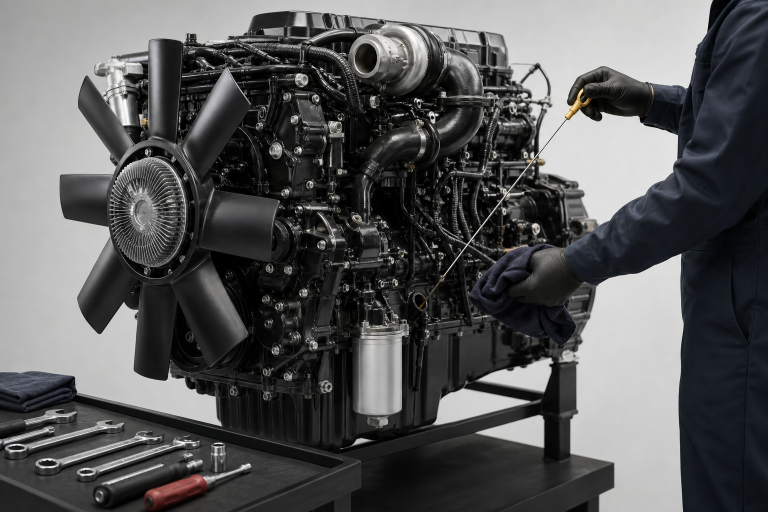
Perform a slow walk-around with the engine off. Look beneath the vehicle for fresh oil, coolant, fuel, or diesel exhaust fluid. Inspect filters, fittings, drain plugs, hoses, seals, and the radiator area. Check belts, pulleys, mounts, visible fasteners, and wiring harnesses for rubbing, cracking, looseness, or corrosion.
Pay Close Attention to the Air Path
Examine the intake piping, turbocharger connections, charge-air cooler, clamps, and rubber boots. Dust tracks around a joint can reveal an air leak, while an oily film near a boost connection may point to a loose clamp or damaged boot. A clean engine is easier to inspect, but avoid aggressive pressure washing around electrical connectors, sensors, and exposed wiring.
Read Smoke and Engine Sounds
Smoke and sound changes are clues, not final diagnoses. White smoke can be associated with unburned fuel, poor combustion, or coolant entering the cylinders. Blue smoke may suggest oil is being burned. Black smoke can indicate limited airflow, excessive fueling, boost loss, or an after-treatment issue. Sharp knocking, heavy tapping, or sudden mechanical noise deserves prompt professional attention. Whistling or rushing air under acceleration often points toward a turbocharger or charge-air leak.
Write down when the symptom appears: cold start, idle, acceleration, heavy load, regeneration, or sustained highway operation. That timing can make the diagnosis much faster.
Test Air, Fuel, and Cooling Systems
Modern diesel engines rely on several systems working together. A qualified inspection may include measuring intake restriction, pressure-testing the charge-air system, checking fuel pressure, inspecting filter condition, pressure-testing the cooling system, and verifying thermostat and fan operation. Compare dash gauges with scan-tool data when possible, since a faulty sender or wiring problem can create misleading readings.
If an engine overheats, stop safely and do not remove a hot radiator or coolant cap. Let the system cool, check for visible leaks or a failed belt, and identify the cause before returning the vehicle to service. Continuing to operate an overheated diesel can turn a manageable cooling repair into major engine damage.
Use Diagnostic Tools and Service Records
Scan tools can reveal active and stored fault codes, sensor readings, power derates, temperature trends, and regeneration history. Save the codes before clearing them. Then record engine hours, mileage, load conditions, temperatures, and recent repairs. A code should guide testing, not trigger automatic parts replacement. A failed sensor, poor ground, damaged wire, air leak, or mechanical problem can produce similar alerts.
Oil analysis, inspection photos, and detailed repair notes help identify repeat failures. Patterns matter, particularly when the same code returns after a repair.
Inspect Emissions Equipment
Inspect exhaust gas recirculation components, diesel oxidation catalysts, diesel particulate filters, selective catalytic reduction parts, sensors, dosing lines, and wiring for damage or leaks. Review interrupted regenerations and verify that diesel exhaust fluid is clean and uncontaminated. Required emissions equipment should never be removed or defeated. Regular walk-around practices also support the broader inspection focus on exhaust, fuel, driveline, and related vehicle systems described by CVSA inspection levels.
Choose the Right Repair Path
Match the repair decision to verified test results, not fear or guesswork. A hose, sensor, filter, belt, connector, or wiring repair may restore normal operation quickly. A component repair can make sense when the turbocharger, injector system, cooling hardware, or after-treatment part has failed, but the base engine remains healthy.
Consider an in-frame overhaul when internal wear is confirmed, and the block is serviceable. Complete replacement may be justified when damage is extensive, downtime is critical, or repair costs approach the value of a replacement assembly. For used or remanufactured engines, compare documentation, compatibility, test results, warranty terms, labor costs, parts availability, expected downtime, and the remaining value of the equipment.
Build a Practical Maintenance Plan
Create a routine that reflects the actual duty cycle. Complete a quick visual inspection before each workday, check fluids at scheduled intervals, track filter changes, and plan deeper inspections by mileage, engine hours, or operating conditions. Heavy loads, long idling, dust, short trips, extreme heat, and cold weather can all shorten service intervals. Train drivers and operators to report changes early, then maintain digital records with fault codes, photos, and repair notes.
Final Inspection Checklist
- Are oil, coolant, fuel, and diesel exhaust fluid levels correct?
- Are there fresh leaks, loose clamps, damaged hoses, or rubbed wiring?
- Does the engine start, idle, and respond normally?
- Has smoke color, engine noise, or operating temperature changed?
- Are warning lights, stored codes, or power derates present?
- Is the intake and charge-air system sealed?
- Are belts, fans, mounts, and cooling components in good condition?
- Are emissions components intact and service records free of repeat issues?
A careful diesel inspection does more than find a problem. It helps identify the right problem, prioritize repairs, reduce avoidable downtime, and protect the long-term value of the truck or equipment. When symptoms remain unclear, professional testing is usually less expensive than guessing with major parts.