
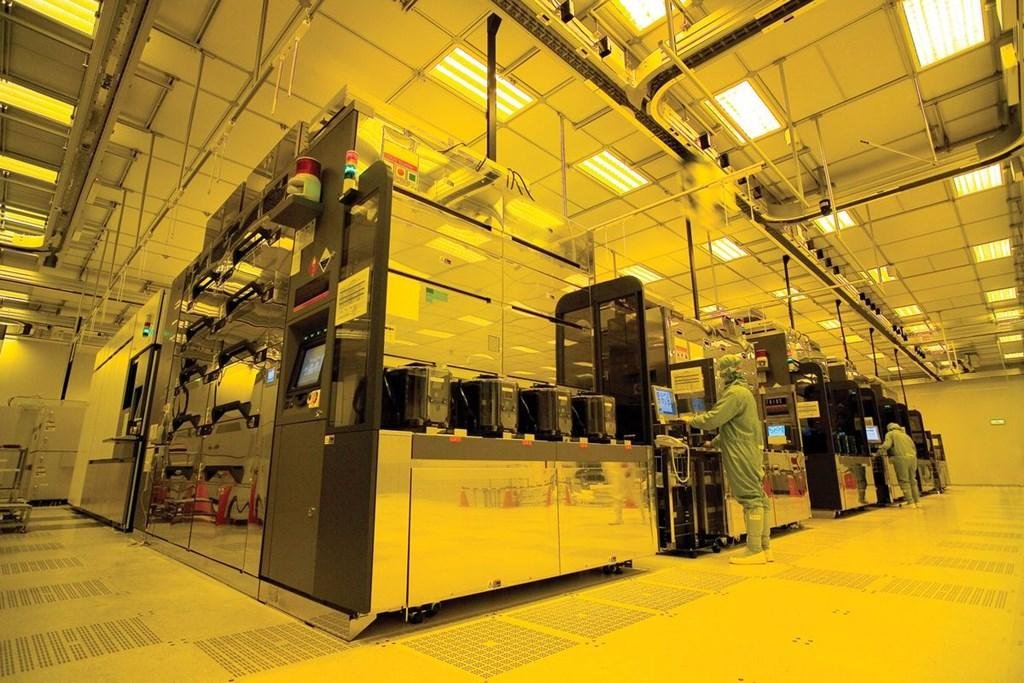
AI infrastructure is fueling a massive surge in semiconductor demand. Big Tech’s aggressive AI investments are driving record growth in data center chips, memory, and networking silicon.
The global semiconductor industry is entering a remarkable period of expansion as artificial intelligence reshapes demand for processors, memory, networking components, power-management chips and advanced packaging.
The combination of massive AI data center investment, expanding cloud infrastructure and the rapid deployment of generative AI systems is creating an AI chip demand surge across almost every layer of the semiconductor supply chain.
Gartner now forecasts worldwide semiconductor revenue to reach approximately $1.56 trillion in 2026, up 92% from 2025. It expects memory revenue alone to reach about $837 billion, while the portion of semiconductor revenue associated with AI data centers is projected to rise from 36.5% in 2026 to more than 53% by 2030.
This acceleration suggests that the semiconductor industry may be moving into a new investment cycle, with AI infrastructure spending becoming one of the most important forces behind semiconductor revenue growth.
Table of Contents
- AI InfrastThe global semiconductor industry is entering a remarkable period of expansion as artificial intelligence reshapes demand for processors, memory, networking components, power-management chips and advanced packaging.The combination of massive AI data center investment, expanding cloud infrastructure and the rapid deployment of generative AI systems is creating an AI chip demand surge across almost every layer of the semiconductor supply chain.Gartner now forecasts worldwide semiconductor revenue to reach approximately $1.56 trillion in 2026, up 92% from 2025. It expects memory revenue alone to reach about $837 billion, while the portion of semiconductor revenue associated with AI data centers is projected to rise from 36.5% in 2026 to more than 53% by 2030. This acceleration suggests that the semiconductor industry may be moving into a new investment cycle, with AI infrastructure spending becoming one of the most important forces behind semiconductor revenue growth.ructure Is Reshaping the Semiconductor Industry
- Why AI Data Centers Need So Many Chips
- AI Chip Demand Is Expanding Beyond GPUs
- The Growing Importance of High-Bandwidth Memory
- DRAM and NAND Demand Surge
- AI Accelerators and the Processor Competition
- Nvidia, AMD and the AI Accelerator Market
- Custom AI Chips From Big Tech
- Networking Silicon Becomes Critical
- Power Management and Analog Chips
- TSMC and Advanced Manufacturing
- Advanced Packaging Becomes a Bottleneck
- Semiconductor Supply and Demand Challenges
- Big Tech Capital Expenditure Fuels the AI Arms Race
- Semiconductor Market Forecast Through 2030
- Companies Benefiting From AI Semiconductor Demand
- Risks to the Semiconductor Supercycle
- What AI Infrastructure Means for the Future
- Frequently Asked Questions
- Conclusion
AI Infrastructure Is Reshaping the Semiconductor Industry
Artificial intelligence is no longer simply a software story.
The rapid adoption of generative AI has created enormous demand for physical computing infrastructure, including data centers, servers, GPUs, memory, networking equipment, storage and power systems.
This is why AI infrastructure investment has become such an important driver of the global semiconductor market.
Companies developing large AI models need enormous amounts of computing power. Training sophisticated models requires thousands of processors operating together, while serving AI applications to millions of users requires additional infrastructure for inference.
As a result, the industry is experiencing AI-driven chip demand across multiple semiconductor categories.
Gartner estimates that AI data centers will represent 36.5% of semiconductor revenue in 2026 and could account for more than 53% by 2030.
That represents a major structural change in the semiconductor industry.
Why AI Data Centers Need So Many Chips
A modern AI data center is much more than a collection of powerful GPUs.
An AI cluster requires multiple semiconductor components working together.
These include:
- AI accelerators
- CPUs
- High-bandwidth memory
- DRAM
- NAND flash
- Networking chips
- Ethernet components
- Optical interconnects
- Power-management ICs
- Analog devices
- Storage controllers
- Data-center processors
- Advanced packaging technologies
This creates a broad AI hardware ecosystem.
The increasing complexity of AI systems also means that semiconductor demand is spreading throughout the infrastructure stack.
Gartner specifically expects AI clusters to require increasing quantities of CPUs, networking silicon, power-management components, analog devices and optical interconnect technologies as the systems become larger and more power-intensive.
In other words, the AI boom is not benefiting only one chip category.
It is expanding the entire semiconductor industry.
AI Chip Demand Is Expanding Beyond GPUs
GPUs have received most of the attention because of their importance in AI training.
However, the next phase of AI infrastructure is creating demand for many other processors.
AI Training
Training large AI models requires enormous parallel computing capability.
This has created strong GPU demand for AI training, particularly for advanced accelerators designed to process massive amounts of data simultaneously.
AI Inference
Inference occurs when trained AI models generate responses or predictions.
As AI applications become more widespread, AI inference market growth is becoming increasingly important.
This could shift some demand away from purely training-focused hardware toward specialized AI inference chips designed for efficiency and lower operating costs.
Custom Accelerators
Major cloud companies are also designing their own chips.
These include Google’s TPUs and Amazon’s Inferentia and Trainium processors.
Custom AI accelerators can allow cloud providers to optimize hardware for specific workloads while reducing dependence on third-party GPUs.
This is increasing competition in the AI accelerator market.
The Growing Importance of High-Bandwidth Memory
One of the biggest changes created by AI computing is the growing importance of high-bandwidth memory (HBM).
AI accelerators require extremely fast access to large amounts of data.
HBM addresses this need by placing multiple memory dies close together and providing very high bandwidth.
This makes HBM particularly valuable for AI workloads.
According to Omdia, AI demand is currently exceeding the semiconductor industry’s ability to produce and package chips, with bottlenecks involving HBM, advanced packaging and leading-edge manufacturing capacity expected to persist into at least 2027.
The result is a major increase in the HBM market size and growth outlook.
TrendForce also reports that HBM remains essential for AI accelerators, with HBM4 ramping up and tight supply supporting higher pricing.
DRAM and NAND Demand Surge
The AI boom is affecting conventional memory markets as well.
AI servers require substantially more memory than many traditional servers.
This has increased memory content per AI server, putting pressure on manufacturers to expand production.
Gartner forecasts:
- DRAM revenue growth of 246.6% in 2026
- NAND flash revenue growth of 371.9% in 2026
- Total memory revenue of approximately $837 billion
- Memory accounting for roughly 54% of semiconductor revenue in 2026
These figures illustrate how dramatically the memory pricing cycle has changed.
Gartner expects memory revenue to surpass $1 trillion in 2027.
This has also raised concerns about memory supply-demand dynamics.
If AI infrastructure deployment continues growing faster than memory production capacity, shortages could continue affecting prices and server costs.
AI Accelerators and the Processor Competition
The AI accelerator market is becoming one of the most competitive areas in technology.
The traditional CPU remains essential for general-purpose computing, but AI workloads require specialized processors capable of handling enormous numbers of mathematical operations.
That has increased investment in:
- GPUs
- AI ASICs
- TPUs
- NPUs
- Inference accelerators
- Custom silicon
- Language processing units (LPUs)
The growing variety of processors reflects the changing nature of AI computing.
Training and inference have different requirements, and companies increasingly want specialized hardware for particular workloads.
This creates opportunities for both established chip companies and newer semiconductor designers.
Nvidia, AMD and the AI Accelerator Market
Nvidia AI Dominance
Nvidia continues to occupy a leading position in the AI accelerator ecosystem.
Its GPUs and integrated data-center platforms have become central to large-scale AI training and inference.
The company’s position is supported by its hardware, networking technologies and software ecosystem.
The intense demand for AI infrastructure has helped Nvidia maintain strong momentum, although competitors are increasingly challenging its position.
AMD AI Accelerators
AMD is positioning its Instinct accelerator family as a major alternative to Nvidia.
The company reported second-quarter 2026 data-center revenue of $6.72 billion, more than double the year-earlier figure, while total quarterly revenue reached $11.54 billion.
AMD has also indicated that it expects to more than double its data-center sales by 2027.
This makes Nvidia vs. AMD in AI chip market share one of the industry’s most closely watched competitive battles.
Custom AI Chips From Big Tech
The AI infrastructure arms race is encouraging major technology companies to develop specialized processors.
Google has its TPU architecture, while Amazon develops Trainium and Inferentia chips.
Other hyperscalers are also increasingly exploring custom silicon.
This trend could eventually reduce dependence on general-purpose GPUs for certain workloads.
Marvell’s recent partnership with Google illustrates this movement. The companies are working together on custom AI chip development, highlighting the growing importance of specialized silicon and infrastructure components.
The trend toward custom chips is important because it expands semiconductor demand even if the market share of one particular GPU vendor changes.
Networking Silicon Becomes Critical
AI clusters require enormous amounts of data to move between processors, memory systems and storage.
As AI clusters become larger, networking becomes a potential bottleneck.
This is increasing networking silicon demand.
Companies such as Broadcom and Marvell are benefiting from the expansion of AI-related networking and custom silicon.
Broadcom’s AI business includes custom accelerators and networking/connectivity solutions, illustrating how the company is positioned across multiple parts of the AI infrastructure stack.
High-speed Ethernet, switches, optical technologies and specialized interconnects are becoming increasingly important as AI clusters scale.
Power Management and Analog Chips
AI data centers consume enormous amounts of electricity.
That creates another semiconductor opportunity: power management.
AI accelerators need stable and efficient power delivery, while data-center operators are increasingly focused on reducing energy consumption.
Companies producing power-management ICs and analog semiconductors can therefore benefit from AI infrastructure spending even if they do not manufacture AI processors themselves.
Analog Devices recently forecast quarterly results above Wall Street expectations, citing strong AI-related demand for its power-management chips.
This demonstrates the broader effect of AI infrastructure on the semiconductor supply chain.
TSMC and Advanced Manufacturing
The TSMC role in AI chip manufacturing is crucial because many leading AI processors depend on advanced semiconductor manufacturing.
The Taiwan-based foundry produces chips designed by companies across the technology industry.
As AI chips become more complex, manufacturers need increasingly advanced process technologies.
TSMC has continued investing heavily in advanced manufacturing and packaging capacity. Its board has approved substantial capital spending for advanced technology, advanced packaging and fab construction.
TSMC has also introduced newer process technologies designed to support increasingly demanding AI and high-performance computing applications.
This makes TSMC one of the central companies in the global AI semiconductor supply chain.
Advanced Packaging Becomes a Bottleneck
The semiconductor industry is no longer limited simply by transistor manufacturing.
Advanced packaging technologies have become equally important.
Modern AI processors combine computing dies with HBM and other components in highly sophisticated packages.
This creates additional manufacturing complexity.
TSMC has acknowledged that its advanced packaging capacity is tight and that it is working with partners to expand capacity.
Omdia similarly identifies advanced packaging as one of the major constraints on the AI semiconductor supply chain.
This means semiconductor companies must expand not only wafer production but also packaging capacity.
Semiconductor Supply and Demand Challenges
The rapid increase in chip supply and demand is creating a difficult balancing act.
Manufacturers want to increase production, but semiconductor factories require enormous capital investments and years of planning.
Building a new advanced fab is not something companies can accomplish quickly.
The same applies to HBM production and advanced packaging.
Omdia expects supply constraints affecting HBM, advanced packaging and leading-edge nodes to persist into at least 2027.
This creates the possibility of continuing shortages in specific parts of the semiconductor supply chain even as overall chip production expands.
Big Tech Capital Expenditure Fuels the AI Arms Race
The world’s largest technology companies are spending extraordinary amounts on AI infrastructure.
TrendForce estimates that the combined 2026 capital expenditure of nine major cloud providers—including Google, Amazon, Meta, Microsoft, Oracle, ByteDance, Tencent, Alibaba and Baidu—will exceed $886.7 billion.
It also expects the combined capital expenditure of these companies to increase by approximately 90% year over year in 2026.
This is a major reason cloud capital expenditure has become such an important driver of semiconductor demand.
The spending is supporting:
- AI data centers
- GPU clusters
- Custom accelerators
- Networking equipment
- Storage systems
- Power infrastructure
- Cooling systems
- Optical connectivity
The result is an AI infrastructure arms race among hyperscalers.
Semiconductor Market Forecast Through 2030
The outlook for the semiconductor industry has become increasingly optimistic.
Gartner forecasts worldwide semiconductor revenue at approximately $1.56 trillion in 2026, compared with $809 billion in 2025.
It expects revenue to approach $1.94 trillion in 2027.
The most important long-term shift may be the growing contribution of AI data centers.
Gartner expects AI data center semiconductor revenue share to increase from 36.5% in 2026 to more than 53% by 2030.
IDC also forecasts the semiconductor market to exceed $1 trillion in 2026, although its estimate of approximately $1.29 trillion is lower than Gartner’s.
The difference illustrates an important point: market forecasts vary considerably depending on methodology and assumptions.
Nevertheless, both forecasts point toward strong semiconductor industry expansion driven by AI infrastructure.
Companies Benefiting From AI Semiconductor Demand
The AI boom is creating opportunities throughout the semiconductor ecosystem.
| Company | Key AI Infrastructure Role |
|---|---|
| Nvidia | AI GPUs, accelerators and systems |
| AMD | AI accelerators and data-center CPUs |
| Broadcom | Networking and custom AI silicon |
| Marvell | Custom silicon and networking |
| TSMC | Advanced chip manufacturing and packaging |
| Samsung | Memory, HBM and semiconductor manufacturing |
| SK Hynix | HBM and advanced memory |
| Intel | CPUs and Gaudi AI accelerators |
| Analog Devices | Power management and analog chips |
Samsung HBM Production
Samsung is expanding its semiconductor capabilities amid strong AI demand. Reuters reported in August that Samsung raised prices for some advanced foundry services as AI-chip demand increased and capacity remained constrained.
SK Hynix Memory Supply
SK Hynix has become one of the most important suppliers in the AI memory market.
The company reported record second-quarter 2026 results, driven by high-value DRAM, HBM and NAND demand associated with AI infrastructure.
It has also announced approximately 54 trillion won in investments for new DRAM and NAND fabs to strengthen its long-term AI memory production base.
Risks to the Semiconductor Supercycle
Despite the enormous growth opportunity, the semiconductor market faces several risks.
AI Investment Could Slow
If hyperscalers reduce their capital spending, demand for AI chips could weaken.
Supply Could Catch Up
New semiconductor factories and memory capacity could eventually reduce shortages and put pressure on prices.
High Valuations
Investors have increasingly questioned whether expectations for AI growth have become too high.
Geopolitical Risks
Semiconductor manufacturing is concentrated in several important regions, creating geopolitical and supply-chain risks.
Export Restrictions
Restrictions on advanced chips and semiconductor manufacturing equipment can affect international supply chains.
AI Hardware Efficiency
More efficient algorithms and processors could reduce the amount of hardware required for individual AI workloads.
These factors mean that the semiconductor supercycle should not be considered guaranteed.
What AI Infrastructure Means for the Future
The most important change is that AI is turning computing infrastructure into a strategic investment priority.
The previous semiconductor cycle was heavily influenced by smartphones, PCs and consumer electronics.
The current cycle is increasingly centered on data centers and AI.
That changes the industry’s priorities.
Instead of simply producing faster processors, semiconductor companies are developing complete systems involving:
- Compute
- Memory
- Networking
- Storage
- Power
- Cooling
- Optical connectivity
- Advanced packaging
The future of AI compute infrastructure will therefore depend on the entire technology stack.
The biggest winners may not necessarily be the companies producing the most recognizable AI processors. Companies supplying memory, networking, power management, manufacturing and packaging can also capture significant value.
Frequently Asked Questions
How AI infrastructure is driving semiconductor growth?
AI infrastructure requires huge quantities of processors, HBM, DRAM, NAND, networking chips, power-management components and advanced packaging. Increasing AI data-center investment is therefore expanding demand across the entire semiconductor supply chain.
Why do AI data centers need more memory chips?
AI models process huge datasets and require fast access to large quantities of information. HBM provides extremely high bandwidth for AI accelerators, while DRAM and storage support the wider server infrastructure.
What is causing the HBM shortage and semiconductor supply chain pressure?
Rapid AI accelerator deployment has increased demand for HBM faster than manufacturers can expand capacity. Advanced packaging and leading-edge manufacturing are also creating bottlenecks.
Will AI inference drive the next wave of chip demand?
AI inference is expected to become increasingly important as generative AI applications move from model training into everyday consumer and enterprise use. This could increase demand for specialized inference processors and more efficient AI systems.
What is the semiconductor revenue forecast for 2026-2030?
Forecasts vary by research firm. Gartner expects approximately $1.56 trillion in semiconductor revenue in 2026 and projects the AI data-center share of semiconductor revenue to exceed 53% by 2030.
How important is TSMC to AI chip manufacturing?
TSMC is one of the world’s most important advanced semiconductor foundries and plays a critical role in manufacturing high-performance chips used in AI systems. Its advanced packaging and manufacturing capacity are particularly important to the AI supply chain.
Who is leading the AI chip market?
Nvidia remains a leading force in AI accelerators, while AMD, Google, Amazon, Broadcom, Marvell and other companies are expanding their positions through GPUs, custom accelerators, networking silicon and specialized processors.
The semiconductor industry is entering a new phase in which AI infrastructure spending is becoming one of the strongest sources of demand.
The impact extends far beyond GPUs.
AI data centers require HBM, DRAM, NAND, CPUs, networking silicon, power-management components, optical interconnects and sophisticated advanced packaging.
That is why semiconductor revenue growth is accelerating across multiple categories.
Gartner’s latest forecast of approximately $1.56 trillion in global semiconductor revenue in 2026 demonstrates the scale of the current expansion, while its projection that AI data centers could represent more than half of semiconductor revenue by 2030 highlights how deeply artificial intelligence is changing the industry.
At the same time, companies such as Nvidia, AMD, Broadcom, Marvell, TSMC, Samsung and SK Hynix are investing heavily to capture opportunities created by the AI boom.
The biggest challenge may now be keeping up with demand.
HBM capacity, advanced packaging, leading-edge manufacturing and power infrastructure are all becoming potential bottlenecks.
If Big Tech continues increasing AI investment, the semiconductor industry could experience several more years of strong structural demand. But investors and businesses will also need to monitor valuation risks, supply expansion, geopolitical restrictions and the possibility that AI infrastructure spending eventually normalizes.
For now, one trend is clear: AI is no longer just creating demand for better software—it is driving a massive physical buildout of the computing infrastructure that makes modern artificial intelligence possible.
References
- Gartner — Worldwide Semiconductor Revenue Forecast, August 24, 2026.
- Omdia — 2026 Semiconductor Forecast and AI Demand Analysis.
- TrendForce — 2026 AI Server Shipments and Cloud Capital Expenditure.
- IDC — Semiconductor Market Forecast 2026.
- TSMC — 2026 Technology and Capital Investment Updates.
- SK Hynix — 2026 AI Memory Investment and Financial Results.
- Reuters — AMD AI/Data Center Revenue Update.
- Reuters — Marvell and Google Custom AI Chip Partnership.
- Reuters — Analog Devices AI-Driven Power Management Demand.