
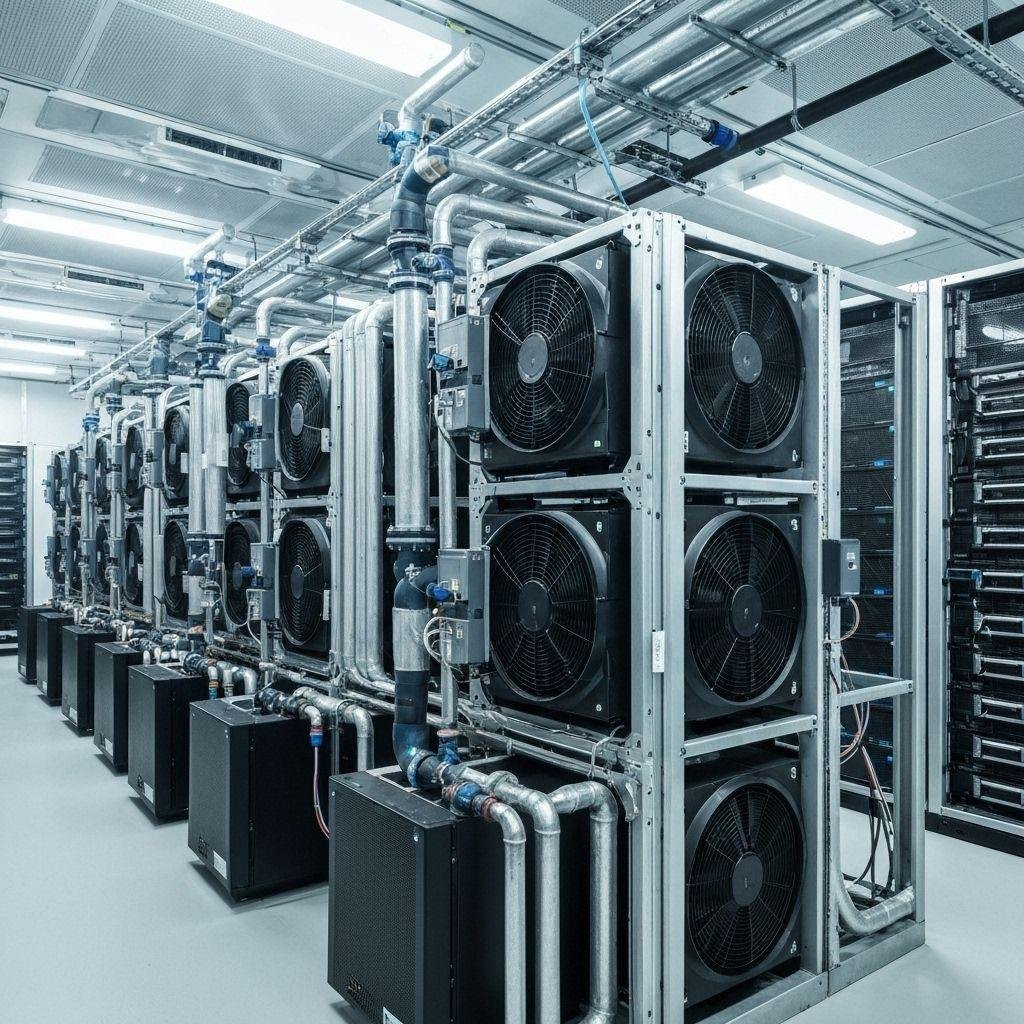
The rapid expansion of artificial intelligence data centers is no longer just a technology or business story in the United States. It is increasingly becoming a political and community issue, with residents, lawmakers, governors and technology companies debating how much infrastructure should be built, who should pay for it and how local communities should deal with its environmental and economic impact.
The debate is growing as technology companies race to build large computing facilities capable of supporting AI models, generative AI, cloud computing and high-performance computing.
Recent polling and political developments show how quickly the issue has moved into mainstream politics. A May 2026 Gallup poll found that 70% of Americans opposed having an AI data center built in their local area, including 48% who strongly opposed it.
At the same time, political leaders and technology companies argue that data centers are important for maintaining U.S. leadership in artificial intelligence and creating investment, construction activity and high-tech infrastructure.
This creates a difficult political question:
How can the United States expand its AI infrastructure without placing an unfair burden on electricity customers, water resources and local communities?
Why AI Data Centers Are Growing So Quickly
Modern AI systems require enormous amounts of computing power.
Large language models, generative AI platforms, AI search engines and enterprise AI applications depend on specialized computing infrastructure. That infrastructure is housed in increasingly large hyperscale data centers.
Inside these facilities are thousands of:
- AI GPUs
- AI accelerators
- Servers
- Networking systems
- Storage systems
- Cooling equipment
- Power infrastructure
The growth of AI has therefore created a major demand for new data center capacity.
The International Energy Agency estimates that data centers accounted for around 415 terawatt-hours of electricity consumption globally in 2024, with the United States representing the largest national share at about 45%.
As AI workloads grow, electricity demand from data centers is becoming an increasingly important part of America’s energy and infrastructure discussion.
Electricity Costs Are at the Center of the Debate
One of the biggest concerns surrounding AI data centers is electricity.
Large facilities can consume enormous amounts of power, particularly when they are running AI workloads continuously.
That raises a political question:
Who should pay for the additional electricity infrastructure required to serve AI companies?
Utilities may need to invest in:
- New power plants
- Transmission lines
- Substations
- Grid upgrades
- Backup generation
- Energy storage
- Distribution infrastructure
Critics argue that ordinary households should not be forced to absorb higher electricity costs simply because large technology companies need additional power.
This concern has become particularly important in regions where electricity markets are already under pressure. In the PJM electricity market, which serves roughly 67 million people across 13 states and Washington, D.C., data-center demand was cited as one factor in a significant increase in wholesale power costs during the first quarter of 2026.
Who Should Pay for AI Infrastructure?
This is becoming one of the most important policy questions.
There are several competing approaches.
Technology Companies Pay More
Under this approach, large AI companies and data-center operators would be required to cover the infrastructure costs they create.
This could include:
- Grid connection charges
- Infrastructure fees
- Higher electricity tariffs
- Transmission costs
- Environmental mitigation costs
Utilities and Ratepayers Share the Cost
Another approach is to spread infrastructure investment across the broader electricity system.
Critics worry that this could eventually result in higher utility bills for households.
Government Provides Incentives
Some states have historically offered tax incentives and other benefits to attract data centers because officials believe they generate investment and economic activity.
The political challenge is determining whether the long-term benefits justify the public costs.
Water Consumption Is Another Major Concern
Electricity isn’t the only resource involved.
Many large data centers use substantial amounts of water for cooling, depending on their cooling technology and local climate.
As AI computing facilities become larger, data center water consumption has become a major concern in communities facing drought or water shortages.
Residents and environmental groups are asking questions such as:
- How much water will the facility use?
- Where will that water come from?
- Will residential customers face restrictions?
- Will groundwater supplies be affected?
- What cooling technology will be used?
- Will the company recycle its cooling water?
These questions can become politically sensitive when a proposed data center is located near residential areas or agricultural communities.
Harvard’s Belfer Center notes that AI-driven data-center expansion is creating pressure on electricity systems and raising questions about water, energy and infrastructure policy.
Noise Pollution Is Creating Local Opposition
Large data centers can also generate continuous noise.
Cooling equipment, backup generators and other mechanical systems can operate around the clock.
For people living near proposed facilities, concerns can include:
- Constant background noise
- Generator testing
- Construction activity
- Increased truck traffic
- Light pollution
- Changes to rural landscapes
These issues may appear relatively small compared with the broader AI economy, but they can become extremely important in local elections and planning meetings.
A resident who lives next to a proposed data center may care much more about noise and property values than about America’s position in the global AI race.
Rural Communities Are Becoming a Major Battleground
Many data centers require large amounts of land.
Developers may therefore look toward rural or semi-rural areas where land is more available and electricity infrastructure can potentially be expanded.
This can create conflict over:
- Farmland
- Property values
- Land use
- Roads
- Water resources
- Local taxes
- Community development
- Environmental impact
Reuters has reported that opposition in communities such as those in Michigan has turned data centers into a broader political issue involving land use, electricity and local resources.
The debate is therefore no longer limited to Silicon Valley or major technology hubs.
Data Centers and the 2026 U.S. Political Landscape
The issue is becoming particularly important as the United States approaches the 2026 midterm elections.
Candidates in several states are being forced to explain their positions on data-center development.
Some politicians support rapid expansion because they believe AI infrastructure can create:
- Investment
- Construction jobs
- Tax revenue
- Technology jobs
- Economic growth
- Energy infrastructure
- Regional development
Others are calling for stricter rules because of:
- Electricity costs
- Water consumption
- Environmental concerns
- Tax incentives
- Noise
- Land use
- Limited permanent employment
The issue has increasingly crossed traditional party lines.
Associated Press reporting shows that governors and candidates from both major U.S. political parties are responding to growing public concern about large data-center projects.
Why Data Centers Are Becoming a Bipartisan Issue
The politics are unusual because support and opposition do not fit neatly into one political party.
Some conservatives emphasize:
- Property rights
- Lower taxes
- Local control
- Affordable electricity
- Limited government
Some progressives emphasize:
- Environmental protection
- Consumer electricity prices
- Water conservation
- Corporate accountability
- Community participation
But both sides can arrive at the same conclusion:
Large AI data centers should not receive unlimited benefits while local residents absorb the costs.
That has made data-center regulation an increasingly bipartisan issue.
New York Takes a Stronger Regulatory Approach
New York became the first U.S. state to impose a moratorium on large data-center construction in July 2026.
The measure targets large facilities consuming 50 megawatts or more and reflects concerns about electricity demand, water resources and local community impacts.
The move is significant because it demonstrates that opposition is no longer limited to individual towns or county governments.
State governments are increasingly becoming involved in decisions about AI infrastructure development.
Pennsylvania Is Also Debating Data Center Rules
Pennsylvania has become another major example of the political conflict.
Governor Josh Shapiro has proposed stricter requirements for data centers, including provisions intended to make operators cover their power costs and address water use and local approval processes.
The debate demonstrates the broader challenge facing policymakers:
How can a state attract AI investment while protecting electricity customers and communities?
Texas Faces Its Own Data Center Debate
Texas has positioned itself as a major destination for technology and data-center investment because of its energy resources, land availability and business environment.
But political opposition is growing there as well.
Recent reporting indicates that Texas Governor Greg Abbott has moved toward delaying some data-center approvals amid concerns about electricity and water consumption.
This illustrates an important shift.
States that previously competed aggressively to attract technology investment are increasingly asking whether AI infrastructure growth is happening too quickly.
Why Politicians Still Support AI Data Centers
Despite the backlash, there are strong arguments in favor of data-center development.
AI is becoming strategically important to the United States.
Data centers support:
- Artificial intelligence
- Cloud computing
- Cybersecurity
- Financial technology
- Healthcare technology
- Enterprise software
- Scientific research
- National security
- Advanced computing
Supporters argue that slowing data-center construction could weaken U.S. competitiveness against countries such as China.
The United States therefore faces a difficult balance between:
AI leadership vs. local infrastructure concerns
AI Data Centers Can Bring Economic Benefits
Data centers require substantial capital investment.
Construction projects can create temporary employment for:
- Electricians
- Engineers
- Construction workers
- HVAC specialists
- Equipment operators
- Security professionals
- Network technicians
They can also generate economic activity for local suppliers and contractors.
Once operational, however, data centers generally require fewer workers than many traditional industrial facilities of comparable capital investment.
That creates another political debate:
Does the number of permanent jobs justify the infrastructure required by a massive data center?
Tax Incentives Are Under Scrutiny
State and local governments have historically offered tax incentives to attract large technology projects.
The reasoning is straightforward:
Lower taxes → more investment → more jobs → more economic activity
But critics argue that governments may give away too much revenue to companies that require expensive public infrastructure.
This has resulted in increasing scrutiny of:
- Property tax exemptions
- Sales tax incentives
- Electricity subsidies
- Infrastructure grants
- Economic development packages
- Corporate tax breaks
The debate is especially intense when residents believe the financial benefits are being privatized while infrastructure costs are being socialized.
AI Data Centers Could Change the U.S. Power Grid
The AI boom is also creating a major challenge for the U.S. electric grid.
Traditional electricity demand has grown relatively slowly for many years.
AI data centers can create extremely large new electricity loads in concentrated geographic areas.
Research from the Belfer Center cites estimates that U.S. data-center electricity demand could increase substantially from 2023 levels as the sector expands.
This could require:
- New generation capacity
- Nuclear power
- Natural gas
- Solar power
- Wind energy
- Battery storage
- Transmission infrastructure
- Grid modernization
The energy strategy chosen by policymakers could itself become political.
Nuclear Energy Is Entering the Conversation
As AI electricity demand increases, technology companies and energy developers are examining nuclear power as a potential source of reliable electricity.
Nuclear plants can provide large quantities of continuous electricity without the direct carbon emissions associated with fossil-fuel generation.
Supporters argue that nuclear energy could help provide 24/7 power for AI data centers.
Critics raise questions about:
- Cost
- Construction timelines
- Nuclear waste
- Safety
- Regulation
This means the AI data-center debate is increasingly connected to America’s broader energy policy.
Renewable Energy Is Also Part of the Discussion
Technology companies are also investing in renewable energy to address the electricity demands of their data centers.
Potential sources include:
- Solar power
- Wind energy
- Geothermal energy
- Battery storage
- Hydroelectric power
Environmental groups argue that AI growth should not lead to a major increase in fossil-fuel consumption.
The debate has become especially political as some environmental activists have criticized proposals to use coal and other fossil fuels to power AI infrastructure.
The Environmental Cost of AI Infrastructure
The environmental discussion extends beyond electricity.
AI data centers can affect:
Energy consumption
Large computing clusters require continuous electricity.
Water use
Cooling systems can consume water.
Land use
Large facilities require significant physical space.
Air pollution
Backup generators and additional fossil-fuel generation can contribute to emissions.
Construction impact
Building large facilities requires concrete, steel, roads and electrical infrastructure.
This has created a new field of discussion around the environmental footprint of artificial intelligence.
AI Companies Are Facing a Public Relations Challenge
Technology companies have historically presented data centers as symbols of innovation and economic progress.
But public opinion is becoming more complicated.
A Gallup survey found that 70% of Americans oppose an AI data center being built in their local area.
That means technology companies may need to do more than announce investment numbers.
They may need to demonstrate:
- How much electricity they will pay for
- How much water they will consume
- How many jobs they will create
- What environmental protections they will implement
- How local communities will benefit
In other words, community engagement could become a critical part of AI infrastructure development.
What Could Responsible Data Center Development Look Like?
Policymakers could consider several approaches.
Full Cost Responsibility
Data-center operators could be required to pay the full incremental cost of electricity and grid infrastructure they create.
Water Efficiency Standards
States could require advanced cooling systems and water-use reporting.
Community Agreements
Technology companies could negotiate agreements covering:
- Local infrastructure
- Community funding
- Environmental protections
- Workforce development
Transparent Tax Incentives
Governments could publicly disclose the value and conditions of data-center tax incentives.
Local Approval
Communities could have a meaningful role in deciding where large facilities are built.
These approaches could potentially reduce conflict while allowing responsible AI infrastructure expansion.
Will Data Center Regulations Slow AI Development?
This is one of the biggest concerns for the technology industry.
If states impose too many restrictions, companies may move projects elsewhere.
That could slow:
- AI infrastructure construction
- Cloud expansion
- AI research
- Data-center investment
- Regional economic development
However, supporters of regulation argue that predictable rules can actually make the industry more sustainable.
The goal is not necessarily to stop AI data centers.
Instead, policymakers are increasingly debating how and where they should be built.
AI Infrastructure Could Become an Election Issue
The political importance of data centers may continue to grow.
Recent reporting indicates that the issue is already affecting gubernatorial campaigns and state-level political debates.
Candidates may increasingly be asked:
- Do you support new AI data centers?
- Who should pay for the electricity infrastructure?
- Should companies receive tax incentives?
- How much water can a data center use?
- Should local governments approve projects?
- Should states impose moratoriums?
- Should AI companies pay additional infrastructure fees?
These questions could make data-center policy an increasingly important part of economic and energy platforms.
The Bigger Question: Who Benefits From the AI Boom?
At the heart of the political debate is a simple question:
Who should benefit from America’s AI boom, and who should pay for its infrastructure?
Technology companies can potentially gain enormous economic value from artificial intelligence.
Investors may benefit from rising AI demand.
Governments may benefit from investment and tax revenue.
Consumers may benefit from better AI-powered services.
But local residents may experience:
- Higher electricity costs
- More construction
- Greater water demand
- Noise
- Changes to land use
- Environmental concerns
Finding a fair balance will likely become one of the most important policy challenges surrounding AI infrastructure.
What This Means for the Future of AI in America
The AI industry is entering a new phase.
The first phase focused primarily on:
AI models and software.
The next phase is increasingly about:
AI infrastructure.
That means the political conversation will increasingly involve:
AI chips + data centers + electricity + water + land + regulations + communities
The technology may be digital, but the infrastructure supporting it is very physical.
AI requires buildings, power plants, transmission lines, cooling systems, semiconductor factories and enormous amounts of capital.
That is why AI data centers are becoming a political issue.
The rapid expansion of AI data centers is creating a new political debate across the United States.
Supporters see these facilities as essential infrastructure for maintaining American leadership in artificial intelligence, cloud computing and advanced technology.
Opponents are asking whether local communities should bear the costs associated with increased electricity demand, water consumption, noise, land use and infrastructure investment.
The growing opposition is significant. Gallup found that seven in ten Americans opposed an AI data center being built in their local area, while states including New York and Pennsylvania have moved toward stronger oversight.
The debate is therefore moving beyond technology policy.
It is becoming a question about energy policy, environmental policy, economic development, taxation, local government and electoral politics.
For the U.S. technology industry, the message is clear: building the next generation of AI infrastructure will require not only advanced chips and powerful computers, but also public support.
The companies and governments that find a workable balance between AI growth and community interests may ultimately determine how quickly America’s artificial intelligence infrastructure can expand.
References
- Gallup — Americans Oppose AI Data Centers in Their Area: Gallup research
- Reuters — Americans are angry about data centers: Reuters report
- Reuters — New York data-center moratorium: Reuters report
- International Energy Agency — Energy and AI: IEA report
- Brookings — Energy demand and AI: Brookings analysis
- Harvard Gazette — Why communities are pushing back: Harvard analysis
Disclaimer
All information in this article is based on Google/web research and publicly available references available at the time of writing. Data-center projects, electricity demand, regulations, political positions and public opinion can change. This article is intended for informational and educational purposes only and should not be considered political, financial, legal or investment advice. Readers should verify important developments through the original sources.